BEING & BELONGING
BEING & BELONGING
The Series takes place in-person on the second Wednesday of the month from September 2022 through May 2023. Each night begins with a poetry reading featuring regionally- or nationally-known poets, followed by an open mic – one poem, one page. The authors’ book will be available to buy for book signing and conversation. Beer, wine, soft drinks, and snacks will be available for purchase. Free of charge. Ample parking available at Real Art Ways. Audience mask wearing is encouraged, but not required. 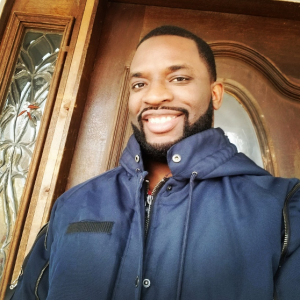
About Riverwood Poetry Series
The Riverwood Poetry Series, Inc. is a non-profit arts organization committed to the promotion and appreciation of poetry in Connecticut. RPS, Inc. is invested in providing entertaining and thought-provoking programming, while responding to the needs of our neighbors through community outreach and collaboration. From their Facebook page: “The Riverwood Poetry Series has innovated many programs since our inception, all of them free to the public. We provide entertaining and thought-provoking poetry in a relaxed atmosphere.”
January’s Poets:
Rayon Lennon
Rayon Lennon was born in rural Jamaica. He moved to New Haven County, Connecticut when he was 13. His work has been published widely in various literary magazines, including, The Mainstreet Rag, Step Away Magazine, Folio, The Connecticut River Review, The African American Review, Noctua Review, New Haven Review, Indianapolis Review, The Connecticut Review, Callaloo, The Columbia Journal, and Rattle. He has won numerous poetry contests including the 2017 Rattle Poetry Prize. His poems have been nominated for the Pushcart Prize. His first book of poems, Barrel Children, was released in March, 2016, by Main Street Rag Publishing Company. Barrel Children was a finalist for the 2017 Connecticut Book Award for Best Poetry Book.
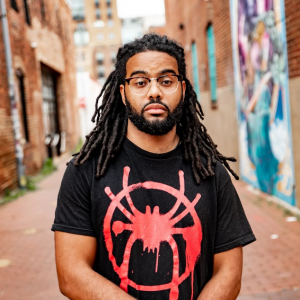
Josh Brown
Josh Brown, known as AnUrbanNerd, is a rap and spoken word artist as well as a visual artist with a background in education and engineering. He served as the current New London Poet Laureate. He has been writing and performing for more than 15 years. Josh spent years suppressing his gift trying to avoid being a stereotypical Black man who raps. He learned, however, that “our gifts are not our own,” and now he gives his gift back whenever he can. He has published several poems through Magik Press and has written and distributed two music EP’s. He currently works as the SCHOLA2RS House Director, teaching and mentoring young Black men at the University of Connecticut Storrs Campus.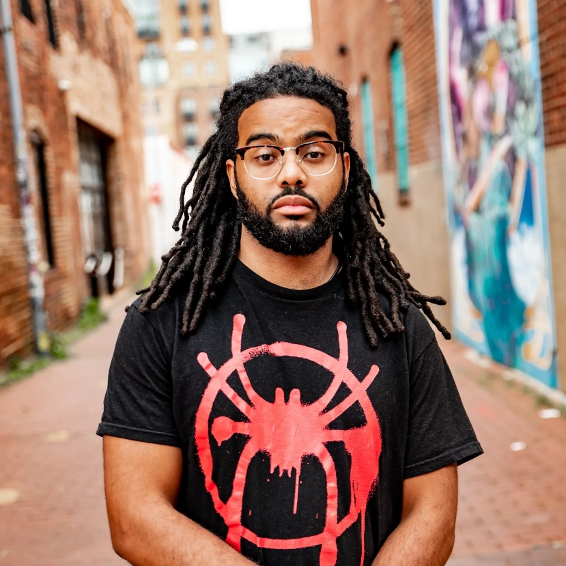
About Riverwood Poetry Series 
The Riverwood Poetry Series, Inc. is a non-profit arts organization committed to the promotion and appreciation of poetry in Connecticut. RPS, Inc. is invested in providing entertaining and thought-provoking programming, while responding to the needs of our neighbors through community outreach and collaboration. From their Facebook page: “The Riverwood Poetry Series has innovated many programs since our inception, all of them free to the public. We provide entertaining and thought-provoking poetry in a relaxed atmosphere.” An experience of music imagined and created in real time. A journey with preconditions through waves of sonic discovery. Check out the entire series here. 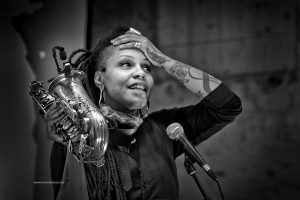
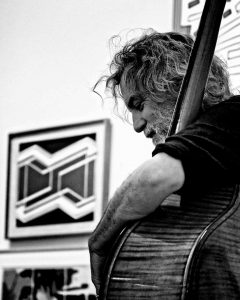
Matana Roberts – Alto Saxophone
Named Rising Star in both Alto Saxophone and Clarinet. – Downbeat Magazine Receiver of a Doris Duke Impact Award in both 2014 & 2016.Matana Roberts (b. 1975) is an American sound experimentalist, visual artist, jazz saxophonist and clarinetist, composer and improviser based in New York City. They have previously been an active member of the Association for the Advancement of Creative Musicians (AACM). The works in their multichapter Coin Coin project have received wide acclaim: Coin Coin Chapter One: Gens de Couler Libres named in multiple JazzTimes critics lists; Coin Coin Chapter Two: Mississippi Moonchile was called “stunning” by both the Chicago Reader & SPIN; and Coin Coin Chapter Three: River Run Thee was named among Rolling Stones’s best Avant Albums of 2015. Coin Coin Chapter Four: Memphis has garnered their greatest accolades, and was included in Pitchfork’s Best Experimental Albums, Bandcamp’s Best Jazz Albums, and the top ten of NPR Music Jazz Critics Poll in 2019.
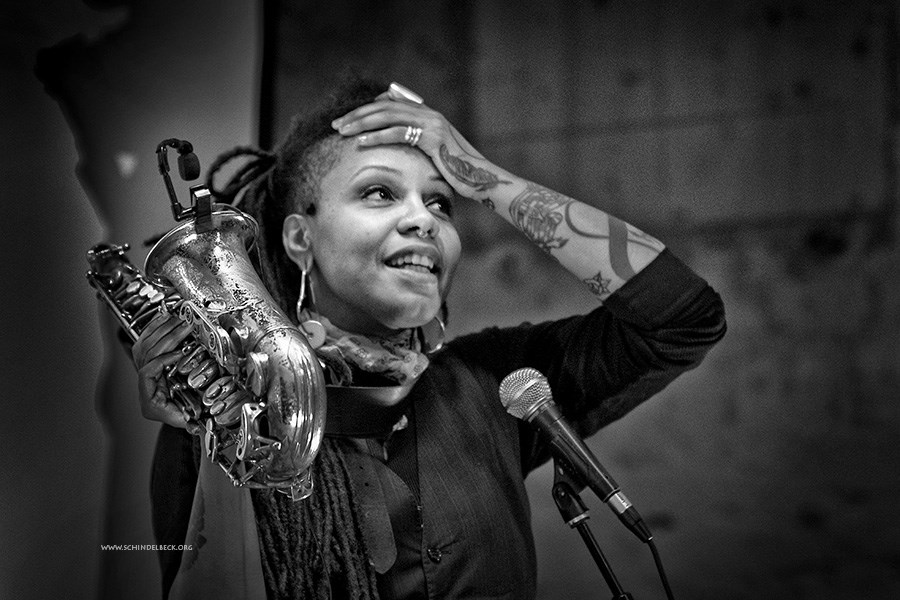
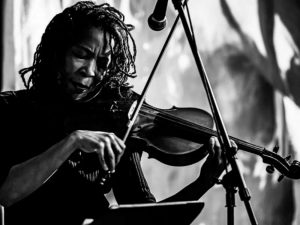
Melanie Dyer – Viola
“An outstanding modern violist.” – The Strad
Melanie Dyer is a violist who moves across free jazz, jazz, orchestral, and experimental music. She has studied with William Lincer, Lee Yeingst, John Jake Kella and Naomi Fellows. Recently she performed and recorded with William Parker, Henry Grimes, Tomeka Reid, Heroes Are Gang Leaders, New Muse 4tet, Women with an Axe to Grind, and other luminous musicians in the United States, Europe, and South Africa. She founded WeFreeStrings, a string/rhythm collective rooted in creative improvisation, and plays viola in Gwen Laster’s New Muse 4tet.
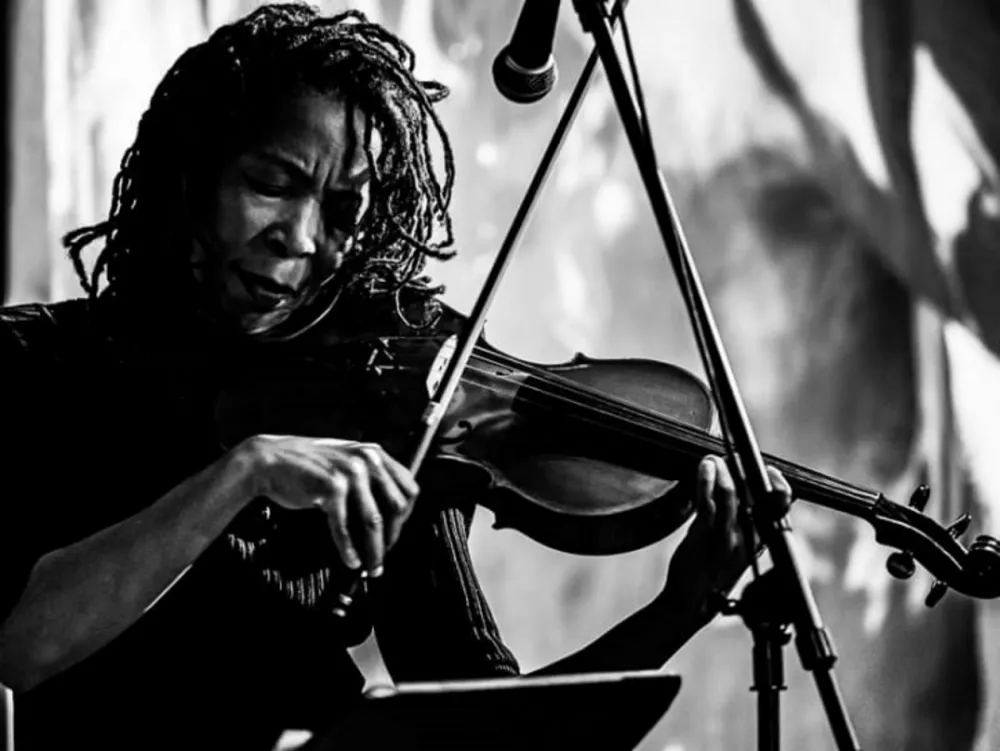
Joe Morris – Bass
“Joe Morris is the preeminent free music guitarist of his generation.” –DownBeat Magazine “One of the most profound improvisers at work in the U.S.” – Wire MagazineMorris was born in New Haven Connecticut in 1955. He began playing guitar at the age of 14 first playing rock music, progressing to blues, then to jazz, free jazz and free improvisation. He released his first record Wraparound (riti) in 1983. He has composed over 200 original pieces of music. Morris has performed and/or recorded with many of the most important contemporary artists in improvised music including, Anthony Braxton, Evan Parker, John Zorn, Ken Vandermark, Mary Halvorson, Tyshawn Sorey, Tomeka Reid, Fay Victor, Tim Berne, William Parker, Sylvie Courvoisier, Agusti Fernandez, Peter Evans, David S. Ware, Joe Maneri, Dewey Redman, Fred Hopkins, Sunny Murray, Wadada Leo Smith, Leroy Jenkins, Lawrence D. “Butch” Morris, Marshall Allen, Barre Phillips, Barry Guy, Matthew Shipp, Gerald Cleaver, and many others. Morris is featured as leader, co-leader, or sideman on more than 200 commercially released recordings on the labels ECM, ESPdisk, Clean Feed, Hat Hut, Aum Fidelity, Avant, OkkaDisk, Not Two, Soul Note, Leo, No Business, Rogue Art, Relative Pitch, Incus, RareNoise, Fundacja Sluchaj, and his own labels Riti and Glacial Erratic. Morris has toured extensively throughout North America and Europe as well as in Brazil, Korea and Japan. He has lectured and conducted workshops on his own music and on improvisation in the US, Canada, and Europe including at Princeton University, Dartmouth College, Harvard University, Bard College, University of Alberta, and University of Guelph. He was the recipient of the 2016 Killam Visiting Scholar Award at University of Calgary. He has been on the faculty at Tufts University, Southern Connecticut State University, Longy School of Music of Bard College, and New School. Since 2000, he has been on the faculty in the Jazz and Contemporary Improvisation Department at New England Conservatory. Morris is the author of the book, Perpetual Frontier: The Properties of Free Music (Riti Publishing 2012).
Real Art Ways welcomes back trombonist, composer, and arranger Papo Vázquez for an annual concert and holiday parranda.
Real Art Ways le da la bienvenida de regreso al trombonista, compositor y arreglista Papo Vázquez a nuestro concierto anual y parranda navideña.
Parranda de aguinaldo (Christmas folk music) is an Afro-Indigenous musical form played during the holidays in various Caribbean and Latin American countries, including Puerto Rico, Cuba, Trinidad, and the coastal area of the states Aragua and Carabobo in Venezuela.
Parranda de aguinaldo (música folclórica navideña), es una forma musical afroindígena que se toca en temporada de vacaciones en varios países del Caribe y América Latina, incluidos Puerto Rico, Cuba, Trinidad y la zona costera de los estados de Aragua y Carabobo en Venezuela.
Band of Pirates
Papo Vázquez – Trombone, Leader
Jose Mangual – Vocals, Percussion
Ivan Renta – Sax
Gabriel Chakarji – Piano
Ariel Robless – Bass
Alvester Garnett – Drums
Carlos Maldonado – Percussion
Reinaldo DeJesus – Percussion
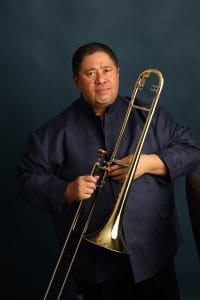
Papo Vázquez Trombonist, composer, arranger, has 40+ years of career spanning Jazz, Latin and Afro-Caribbean music. National Endowment for the Arts Master Artist, Grammy Nominee. Featured in the 2020 NPR Music Jazz Critics Poll.
“En fin, Vázquez junto a sus Mighty Pirates Troubadours e invitados exponen un proyecto exquisito y cadencioso que se transforma en un banquete para los amantes del género.” – El Vocero, 2020 (In short, Vázquez along with his Mighty Pirates Troubadours and guests present an exquisite and lilting project that becomes a banquet for lovers of the genre.)
•Musical Director for the National Puerto Rican Day Parade Orchestra, (NYC/WABC) 2016, 2017, 2018, 2019 •Commissioned by Wynton Marsalis to compose music for Jazz and Art series, conducted and performed with J@LC orchestra, CD release August 2019 •New York Pops Education, Board of Education certified, 2018 and 2019
•Commissioned new music for Afro Latin Jazz Alliance for “Nueva Musica” concert series
Learn more at his website.
Sponsored By:
Guilford Savings Bank
MacDermid Reynolds & Glissman
Danny Giles
Real Art Ways presents a video project by interdisciplinary artist Danny Giles. Curated by David Borawski.
In Danny Giles’ recent video, Game (2019), the artist reframes an activity of daily life. On a dark city corner lit by street lamps on Chicago’s West Side, blurry figures engage in a risky game. Through grainy, slowed down video footage captured from an ambiguous vantage, the viewer is invited to question what they are seeing. What is the event taking place? Who are the actors? Who is holding the camera? For whom is the spectacle intended? Blackness has always been subject to surveillance. Historical instances include legal codes like the 18th-century lantern laws of New York City, which required Black and Indigenous people to carry lanterns with them while on the streets at night and unaccompanied by a white person. The storage and accounting of enslaved Africans portrayed in “The plan of the slave ship Brooks” (1789) also anticipates modern architectures of surveillance like Jeremy Bentham’s writing on the panopticon, a model for surveilling prisoners from a centralized tower that allows the warden to oversee an entire prison at once. Through these examples, scholar Simone Browne writes about how Blackness has been “absented” from readings of surveillance studies. In her book, Dark Matters: On the Surveillance of Blackness, Browne elaborates on her theory of racialized surveillance which she describes as “a technology of social control where surveillance practices, policies, and performances concern the production of norms pertaining to race and exercise a ‘power to define what is in or out of place.’” Alongside racialized surveillance, Browne situates dark sousveillance, “an imaginative place from which to mobilize a critique of racializing surveillance, a critique that takes form in antisurveillance, countersurveillance, and other freedom practices.” In this video work, Giles critically engages with these issues through the overlapping frames of public and private spectacle. He encourages the viewer to grapple with their own perceptions and assumptions about what is being seen, and how this viewing is conditioned by a pervasive system of surveillance. [smartslider3 slider=”21″]About the Artist:
Danny Giles is an artist and educator based in Rotterdam. His work uses varied material and performative approaches to address the possibilities and dilemmas of representing and performing identity, revealing hidden languages of power within mundane objects and spaces. Giles received his MFA from Northwestern in 2013 and BFA from The School of the Art Institute of Chicago in 2011. He attended the Skowhegan School of Painting and Sculpture in 2013. Giles’ work has been exhibited, performed and screened at venues including The Jacob Lawrence Gallery, Seattle WA, Museum of Contemporary Art Chicago, the Mary and Leigh Block Museum, Evanston, IL, El Museo Tamayo, Mexico City, and the Contemporary Arts Museum Houston. Giles serves as Course Director of the Master Fine Art at the Piet Zwart Institute in Rotterdam.
Rashmi Talpade
Real Art Ways presents a solo exhibition by Rashmi Talpade. Curated by David Borawski.
A gallery talk will be held Friday, March 3rd, 6:00 PM. In Every Little Thing, Rashmi uses photo collage to explore environmental challenges faced by our planet. Her recent series, Modern Archaeology, depicts industrial relics and abandoned factories as they are reclaimed by nature’s relentless march against man-made waste and environmental abuse. Created by assembling fragments from a personal collection of photographs, Rashmi’s collages use everyday objects to represent a collision between the past and our constantly changing present. Together the works lay out a narrative of our previous and current societal successes and failures. From Rashmi: “Large manufacturing facilities—one-time icons of industry—have fallen into disrepair just a few miles from modern office buildings in suburban business parks. While the environmentally conscious, highly automated office complexes look toward sustainable energy, the factories of the past all but ignored the environment while providing jobs and livelihoods to ordinary people. These differing perspectives indicate the tensions of changing times, shifting dynamics and complex issues which we are facing as a country. We are at the center of a turbulent time in our history, where change is slowly but surely pervading the lives of young and old. The photo collages document the contrasts of the time we live in through seemingly inconsequential footprints, including abandoned objects, less-than-pristine city sidewalks, and rusted bits of metal. More than simply a collection of decay, Every Little Thing shows an unexpected and radiant beauty to items both natural and manmade which surround us in our daily life.” [smartslider3 slider=”24″]About the Artist:
Rashmi Talpade is a professional artist with a Fine Arts degree from Mumbai, India, specializing in painting and photography. Since immigrating to Connecticut in 1991, she has been involved in the local arts community and has exhibited her work statewide, in New York, New Mexico and India. She is a recipient of an Artist Fellowship from the Connecticut Commission of the Arts and she has received numerous grants from the State of Connecticut and the National Endowment for the Arts to support her public art projects. These projects include works at the New Britain Museum of American Art, the Yale New Haven Children’s Hospital, the five branches of the New Haven Public Library, the Wallingford Public Library, the Essex and Southington Elementary Schools, and the Bandra Municipal School in Mumbai, India. She also has upcoming projects at the New Britain Public Library and with the Spanish Community of Wallingford. Her photo collages are in the permanent collection of the New Britain Museum of Art and the Roopankar Museum of Modern Art, India. Her intricate photo collages are composed of fragments of photographic prints, resembling a single image of an imaginary but familiar subject. Photo Credit: John GrooWednesday, October 26, 6:00 PM. Free admission, no RSVP required.
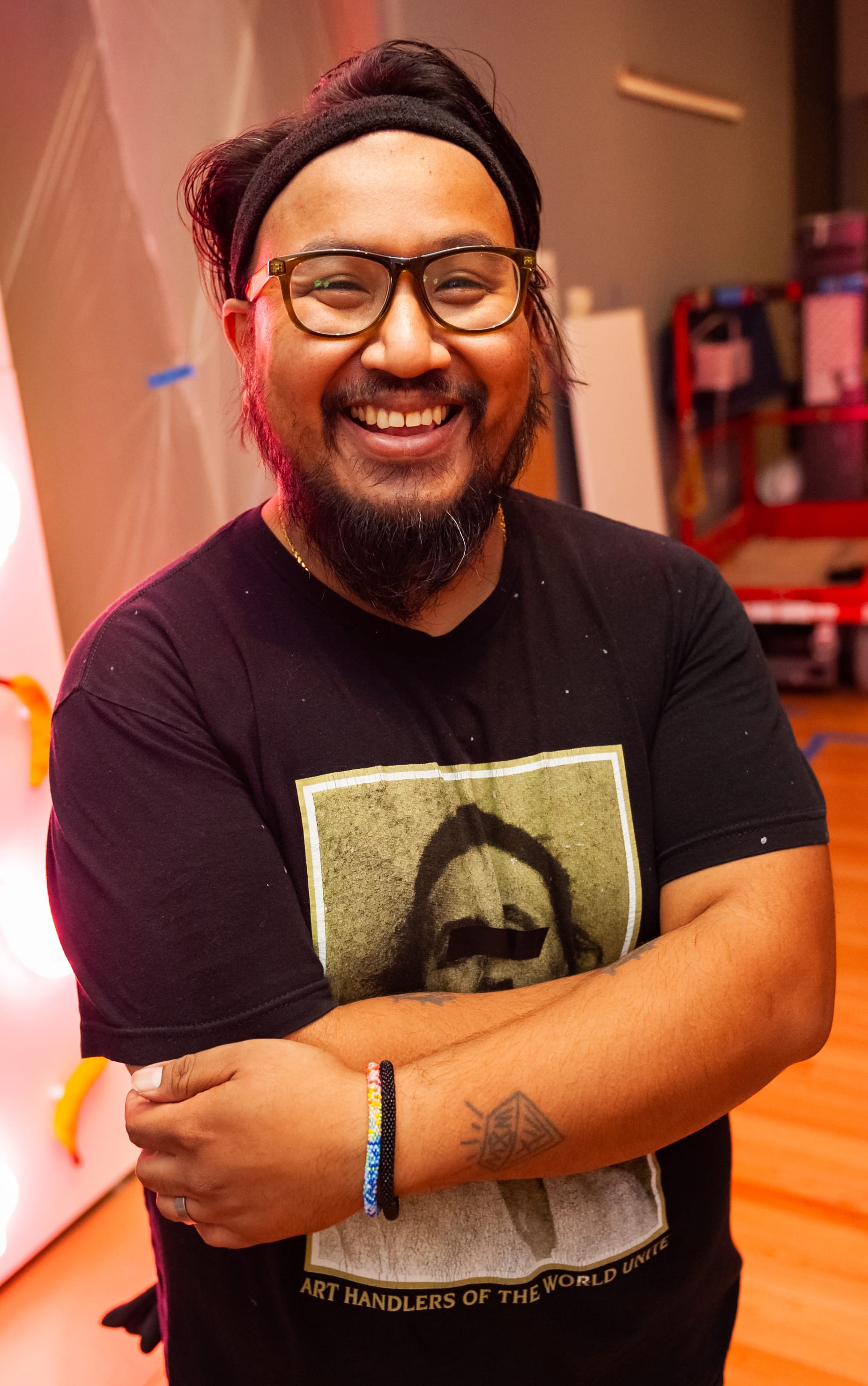 You’re invited to a conversation between artist Joe Bun Keo and Khmer artist-scholar Sokunthary Svay. Bun Keo will discuss the process behind bitter melons / bitter pills, an exhibition that focuses on sentimental, cultural and utilitarian values within the discussion of materiality and identity. Joe Bun Keo is one of six recipients of the 2021 Real Art Awards, which supports emerging artists in New England, New York, and New Jersey. Joe Bun Keo (b. 1987) is a Khmer (Cambodian) – American artist living and working in Connecticut. His work “unpacks intergenerational trauma through the scope of ‘neomaterialism’ and the concept of ‘power objects.’” Sokunthary Svay was born in a refugee camp in
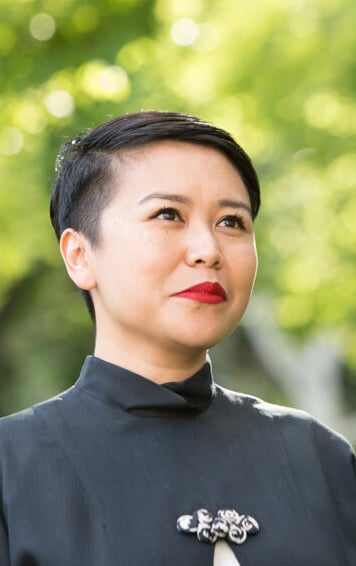 Thailand shortly after her parents fled Cambodia after the fall of the Khmer Rouge regime. They were sponsored to come to the United States and resettled in the Bronx where she grew up. A founding member of the Cambodian American Literary Arts Association (CALAA), she has received fellowships from the American Opera Project, Poets House, Willow Books, and CUNY, as well as commissions from Washington National Opera, the Asian American Writers’ Workshop, the Chautauqua Institution, and ISSUE Project Room. In addition to publishing a poetry collection, Apsara in New York (Willow Books, 2017), Svay has had her writing anthologized and performed by actors and singers. Svay’s first opera, Woman of Letters, set by composer Liliya Ugay, received its world premiere at the Kennedy Center in January 2020 as part of the American Opera Initiative. A recent recipient of the OPERA America IDEA grant, her second opera with Ugay, Chhlong Tonle, received its premiere in March 2022. She is a Ph.D. candidate in English at the CUNY Graduate Center and a Lecturer at CCNY.
Joe Bun Keo
Real Art Ways presents a solo exhibition of recent work by 2021 Real Art Award recipient Joe Bun Keo.
Connecticut-based artist Joe Bun Keo uses found and altered objects to create poetic installations and assemblages. His recent work is informed by personal experiences with mental health, debt, and Khmer (Cambodian) – American identity. In bitter melons / bitter pills, the artist presents a new body of work that focuses on sentimental, cultural and utilitarian values within the discussion of materiality and identity. Download a PDF of the show publication HERE. Featuring an essay by artist and scholar Sokunthary Svay. [smartslider3 slider=”22″]About the Artist:
Joe Bun Keo (b. 1987) is a Khmer (Cambodian) – American artist living and working in Connecticut. His work “unpacks intergenerational trauma through the scope of ‘neomaterialism’ and the concept of ‘power objects.'”About the Real Art Awards:
The Real Art Awards is an annual opportunity for emerging artists living in New England, New Jersey, or New York. The open call, offered with no entry fees to artists, attracts hundreds of applicants each year, of which 6 artists are chosen. Selected artists receive a solo exhibition, with a commissioned essay, professional documentation, and a cash prize of $2,500. The 2021 Real Art Awards was juried by artist and writer Kameelah Janan Rasheed; Hasan Elahi, artist and Director of the School of Art at George Mason University; and Real Art Ways Executive Director Will K. Wilkins. The 2021 Real Art Awards is supported in part by an award from the National Endowment for the Arts. Photo Credit: John GrooHoward el-Yasin
Real Art Ways presents a solo exhibition by Howard el-Yasin. Curated by David Borawski.
Howard el-Yasin’s sculptural and installation work focuses on everyday materials as signs pointing to multiplicities of meaning. Through unconventional and castoff materials, el-Yasin looks at social value and marginalized racial and gender identities. The gallery installation includes an immersive suspended piece comprised of thousands of baked banana peels sourced from the artist’s community.
From el-Yasin: “This body of work is an accumulation of two of my ongoing collection practices: banana skins and dryer lint. Both materials are raw and residual, insofar as they are often discarded as waste by people. For several years now, I’ve been collecting banana skins and dryer lint from people I meet, from friends and family—as well as from my own household. Bananas signify many references (to culture, sex, labor and the global economy…) and dryer lint is largely an American byproduct. Yet, in a speculative sense, this work reflects on the individual and collective histories of its many participants, which can be imagined in the diversity of shapes formed by the process of baking the banana skins, as well as the sorted range of grey hues and other colors with details of various remnants in the lint felted tiles. When looking at the accumulated mass of ordinary materials, an uncanny possibility of seeing begins to emerge. Henceforth, perhaps the spectator will consider the materials differently and question what they know about the construction of value in relation to oneself.” [smartslider3 slider=”23″]About the Artist
Howard el-Yasin is a New Haven, CT-based interdisciplinary artist, curator and educator holding degrees from Maryland Institute College of Art (MICA ’16), Wesleyan University, and New England College. They have exhibited their artwork nationally, and have work in several private collections. They are currently an adjunct faculty member at MICA, and the co-founder/curator of SomethingProjects, an artist-run curatorial initiative. They were a recipient of MICA’s Leslie King-Hammond Award (2016) and the Faculty and Staff Queer Alliance Award (2015). They are a trustee of the Vermont Studio Center and a former VSC residency fellowship recipient (2012). el-Yasin has also served as a volunteer leader with numerous Connecticut-based non-profit organizations, including as Director/Curator of Arts Literature Laboratory (2002-2009).
Photo Credit: John GrooLani Asunción
Saturday, August 6, 7:00 PM. Free admission, no RSVP required.
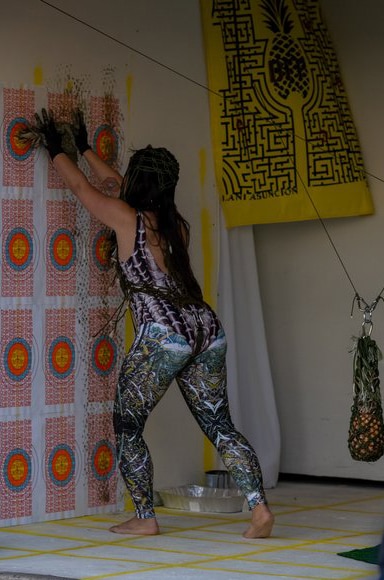 You’re invited to a gallery performance and panel talk as part of Lani Asunción’s exhibition, Duty-Free Paradise, curated by David Borawski. The multimedia exhibition plays on the tensions of lived and imagined island life focusing on Hawai’i. Through the lens of ecotourism, around which the islands’ economy heavily revolves, this work explores the contradictions between perceptions and realities of island life as a constructed paradise. Asunción will perform in and throughout this work in the Main Gallery on Saturday, August 06, 2022, 7-8 PM, followed by a panel discussion 8-9 PM with artists Billie Lee and Joe Bun Keo. Lani Asunción (they/she) is a multimedia artist creating socially engaged art in both private and public spaces, independently and collaboratively. Weaving together a visual language guided by historical research, community engagement, and experimental performance connected to their identity as a queer multiracial Filipinx-American, Asunción integrates new media technologies and transmedia storytelling. Through ritualized performance, they encourage conversations that magnify connections and facilitate healing in the face of cultural violence, oppression, and ancestral intergenerational trauma narratives. Asunción has shown their video performance work in CONTACT ZONE (2018) at the Honolulu Museum of Art School presented by Pu’uhonua Society, and had solo exhibitions at the New Bedford Museum of Art (2016) and Radial Gallery (2020) with the Department of Art and Design at Dayton University. They have performed live at Studios at Massachusetts Museum of Contemporary Art, Museum of Fine Arts Boston, Little Berlin in Philadelphia, PAO Arts Center in Boston, and Aurora Picture Show in Houston, TX. Most recently, Asunción is the recipient of the 2022-23 Kala Fellowship at Kala Arts Institute in Berkeley, CA and was selected as a 2022-25 Boston Center for the Arts Studio Residency. They are an awardee of the 2022 Public Art for Spatial Justice grant from the New England Foundation for the Arts for their socially engaged project Revolutionary AYAT, in addition to receiving the Live Arts Boston Grant (2020) from the Boston Foundation, City of Boston’s Transformative Public Art grant (2020), and Dame Joan Sutherland Fund from the Australian American Association (2017). They are founding member and Producing Artistic Director of the Boston based multimedia collective Digital Soup. They received their master’s degree in Fine Arts in performance and video from the University of Connecticut. Click here to visit the artist’s website. Image Credit: Taylor Blackley
Heather Heckel
Real Art Ways presents a solo exhibition of recent work by 2021 Real Art Award recipient Heather Heckel.
“Due to a complication at birth, my eyes do not work together and I have constant double vision. I see a hyper clear image with my dominant eye, and with my weaker eye I see an overlapping ghost image. My double vision has ignited a lifelong interest in dualities, and how they are apparent in every facet of our lives. In order to make sense of my chaotic visual input I organize my life through minimalism and accuracy, which gets translated through my artistic process. My medium of choice is colored pencil, which I treat as dry paint to achieve accuracy through blending. This collection of artwork demonstrates a progression of my work over the last five years from figurative mirror images, to overlapping objects, to an artist residency that focuses on duality.
The porcelain figurines are portraits of family heirlooms that feature my double vision that is both blurry and sharp. Between each image is an overlapping void that represents how two identical objects cannot occupy the same space at the same time. This often causes me to wonder: which version is the real one?
The series of historical structures and arms were created during an artist residency at Coltsville National Historical Park in Hartford, Connecticut. Coltsville is located on the grounds of the former Colt factory complex, which was used to produce firearms. Samuel Colt sold weapons to both sides of conflicts, and I wanted to emphasize this duality, among others, through double imagery, symmetry, and balance: Win / Loss, Life / Death, Friend / Enemy, Exploitation / Profit. The all-seeing cobalt blue onion dome that sits atop the factory is visible from all areas of Colt Park, and therefore appears repeatedly throughout the drawings. Colt often used European styles of architecture to provide his immigrant workers with a sense of familiarity, as is seen in workers’ housing. Gold stars appear throughout because they are painted on the onion dome, and they serve as a symbol for the loss of a service member in combat and are worn by the families of the fallen.
Ultimately, this collection of artwork is representative of an internal shift of being fearful of how the world views my misaligned eyes to becoming confident in sharing my unique view of the world.” – Heather Heckel
[smartslider3 slider=”16″]About the Artist:
Dr. Heather Heckel, EdD is an artist and art educator living in New York City. Her award-winning artwork has been shown internationally, is in several national permanent collections, and is featured regularly in the local Park Slope Reader. She is a lifelong learner who loves to travel, and has been awarded 16 artist residencies through the National Park Service and Bureau of Land Management. She will begin her tenth year of teaching public school art this Fall, and has taught at the middle school, high school, and college levels. She earned her BFA in Illustration from the Ringling College of Art and Design, her MAT in Art Education from the School of Visual Arts, and her MFA in Painting from the Savannah College of Art and Design. This year she earned her Doctor of Education degree in Educational Leadership from the University of the Cumberlands, where her research investigated the relationships between art education, leadership, and creativity. She is a member of the Society of Illustrators and the New York State Art Teachers Association.
About the Real Art Awards:
The Real Art Awards is an annual opportunity for emerging artists living in New England, New Jersey, or New York. The open call, offered with no entry fees to artists, attracts hundreds of applicants each year, of which 6 artists are chosen. Selected artists receive a solo exhibition, with a commissioned essay, professional documentation, and a cash prize of $2,500. The 2021 Real Art Awards was juried by artist and writer Kameelah Janan Rasheed; Hasan Elahi, artist and Director of the School of Art at George Mason University; and Real Art Ways Executive Director Will K. Wilkins. The 2021 Real Art Awards is supported in part by an award from the National Endowment for the Arts.Benjamin Spalding
Real Art Ways presents a solo exhibition by artist Benjamin Spalding. Curated by David Borawski.
‘Supernature is a sculptural tableau inspired by the 1977 disco hit by the same name, produced by Cerrone with lyrics by Lene Lovich. Set to a sweaty disco tempo, this song takes a darker turn, narrating humanity’s careless harm to the environment and the monsters that rise up to seek revenge. Although seemingly sinister, the song ends with a hopeful call for humans to renegotiate their relationship to, and commune with the environment. Combining large scale figurative dancers, VHS sculptural works and speculative records, Supernature parallels queer nightlife with questions of biodiversity and pageantry.Enamored by the mating rituals of birds of paradise, my research led me to ask “what other locations provide extreme moments of aesthetic and energetic outpouring?” Personal interests provided the answer: the nightclub, specifically the history of American nightlife and disco. From 1970-1979 (when the public decried disco as “dead”), disco culture and the nightclub provided crucial spaces for social engagement and finding community through dance. Specifically, this space was embraced by a spectrum of queer, black, and brown dancers and DJs. It is in these special spaces, where incredible expressions of energy and beauty were expressed. Supernature is an homage to the individuals, music and spaces of this era and a call for community with our immediate environment. Amidst all of the duress of the immediate moment, let us pause and learn to dance with nature.’ – Benjamin Spalding
[smartslider3 slider=”18″]About the Artist:
Benjamin Spalding is an interdisciplinary artist based in Portland, Maine. Taking inspiration from his Puerto Rican grandfather’s profession as a big band leader, Spalding is preoccupied with movement and the pageantry of the body, weaving together elements of club culture, sports, and nature with family history and questions of migration. While receiving a degree in media studies from New York University, Spalding developed a love for figuration, photography and visual narrative while working as a stylist assistant at publications such as Interview Magazine, and Men’s Vogue. After New York, Spalding relocated to Berlin, Germany for 8 years to define his studio practice. It is in Berlin where he began to find a love for club culture and music as a potent mechanism for connection and exploring memory. Upon resettling in Maine, his practice began to shift into working with family photographs, found images, sporting equipment and local ecology. Spalding has also worked as part of the creative force behind Visceral, a queer techno part in Boston. He received his MFA from Maine College of Art and Design (2017) and currently teaches in the Sculpture and Foundations departments.
Lani Asunción
Real Art Ways presents a solo exhibition by interdisciplinary artist Lani Asunción. Curated by David Borawski.
Duty-Free Paradise (2020-2022) is a multimedia exhibition and live performance series that plays on the tensions of lived and imagined island life focusing on Hawai’i. Through the lens of ecotourism, around which the islands’ economy heavily revolves, this work explores the contradictions between perceptions and realities of island life as a constructed paradise. Asunción looks at these tensions through American pop culture, down to the flora and fauna, underwritten by militarism and biopolitics paralleled with Asunción’s lived and family generational experience. Read more about the work in the exhibition essay published in the online Special Issue of Art and Environment in Oceania, Pacific Arts, Volume 20, Issue 1 published by Pacific Arts Association, UC Santa Cruz, CA, 2020.
The gallery’s painted floor is a reference to a hand-drawn floor plan Asunción’s father drafted from memory of his childhood home in the 1930s, located at the historic sugar plantation housing in Kahuku, HI. Viewers can access this floor plan via a QR code to view it through augmented reality within the installation. Asunción will perform in and throughout this work on Saturday, August 06, 2022, 7-8 pm, followed by a panel discussion 8-9 pm with Billie Lee and Joe Bun Keo.
[smartslider3 slider=”10″]About the Artist:
Lani Asunción (they/she) is a multimedia artist creating socially engaged art in both private and public spaces, independently and collaboratively. Weaving together a visual language guided by historical research, community engagement, and experimental performance connected to their identity as a queer multiracial Filipinx-American, Asunción integrates new media technologies and transmedia storytelling. Through ritualized performance, they encourage conversations that magnify connections and facilitate healing in the face of cultural violence, oppression, and ancestral intergenerational trauma narratives.
Asunción has shown their video performance work in CONTACT ZONE (2018) at the Honolulu Museum of Art School presented by Pu’uhonua Society, and had solo exhibitions at the New Bedford Museum of Art (2016) and Radial Gallery (2020) with the Department of Art and Design at Dayton University. They have performed live at Studios at Massachusetts Museum of Contemporary Art, Museum of Fine Arts Boston, Little Berlin in Philadelphia, PAO Arts Center in Boston, and Aurora Picture Show in Houston, TX. Most recently, Asunción is the recipient of the 2022-23 Kala Fellowship at Kala Arts Institute in Berkeley, CA and was selected as a 2022-25 Boston Center for the Arts Studio Residency. They are an awardee of the 2022 Public Art for Spatial Justice grant from the New England Foundation for the Arts for their socially engaged project Revolutionary AYAT, in addition to receiving the Live Arts Boston Grant (2020) from the Boston Foundation, City of Boston’s Transformative Public Art grant (2020), and Dame Joan Sutherland Fund from the Australian American Association (2017). They are founding member and Producing Artistic Director of the Boston based multimedia collective Digital Soup. They received their master’s degree in Fine Arts in performance and video from the University of Connecticut.
Jesús Hilario-Reyes
Real Art Ways presents an exhibit by interdisciplinary artist Jesús Hilario-Reyes.
Hilario-Reyes shares Dishonest Dancers, a video installation of two related bodies of work. Informed by scholar Yomaira Figueroa’s concept of ‘destierro’ – through which Figueroa articulates a condition of being ‘torn from the land’ – Dishonest Dancers finds Hilario-Reyes taking a remedial approach, while exploring ideas of Black and queer fugitivity. The exhibited works include video documentation of multiple iterations of Crossing(s), the artist’s series of ephemeral land works. Alongside footage of these “sand weaving” events, Hilario-Reyes displays Untitled, an animated series of “digital quilts” constructed from three-dimensional scans of dance floors after nights of transportive dancing. Developed as a partial archive of evidence gesturing toward queer utopia, the series incorporates club and rave spaces at the center of queer communities, as well as potential spaces, moving bodies, and bodies of water. This work largely contends with truth, applying scholar Saidiya Hartman’s concept of ‘critical fabulation’ as a means to rupture or complicate reality. This project is supported in part by the National Performance Network Artist Engagement Fund. [smartslider3 slider=”9″]About the Artist:
Jesús Hilario-Reyes (b. 1996) is an artist born in San Juan, Puerto Rico, whose parents emigrated from the Dominican Republic. Hilario-Reyes holds a BFA from the School of the Art Institute of Chicago. They are a recent recipient of the Drawing a Blank Artist Grant, the Leslie Lohman Fellowship, the Lighthouse Works Fellowship (2022) and the Bemis Center Residency program (2022). Hilario-Reyes has exhibited/screened both nationally and internationally, most notably at the Museum of Contemporary Art Chicago, Black Star Film Festival and Mana Contemporary. While situating their practice at the crossroads of sonic performance, land installation, and expanded cinema, their iterative works examine carnival and rave culture throughout the West. Taking a satirical and remedial approach to the effects of ‘destierro’, they simultaneously explore the impossibility of the Black body, and examine the failures of mechanical optics.Nomad MFA 2022
Real Art Ways presents a group exhibition of work from the 5th cohort of Hartford Art School’s Nomad MFA program.
The 8 international artists work in differing media and processes, ranging from sculpture and video to drawing, painting, and performance. Curated by artists and educators Mary Mattingly and Neil Daigle Orians, the exhibition runs concurrently with their thesis projects on display at the University of Hartford’s Joseloff Gallery from June 17 – 26. Each artist explores various narratives throughout their work surrounding climate change, ecology, identity, and history. These disparate stories are woven together through their shared experience navigating an advanced degree program during the COVID-19 pandemic. Featuring work by: Julie Chen Kathryn Cooke Arnethia Douglass Aiyesha Ghani Katie Grove Monica Kapoor Roberta Trentin Mauricio VargasAbout the Nomad MFA Program:
The Nomad MFA (Interdisciplinary Master of Fine Arts) is a low-residency, cross-disciplinary program. This course of study prepares artists for a life of engaged studio and civic practice and reflects the dynamic balance of production, inquiry, and cross discipline collaborations in contemporary art, and the world at large. The objective of this MFA is the development of each student’s art practice and the creation of an expanded toolkit through our innovative curriculum. This objective is achieved through engaged mentoring and through high-impact, field-based classes in contemporary art, ecology, place and culture, indigenous knowledge systems, and the technology spectrum from craft to code. Photo Credit: Denis SemenyakaSteven Laschever
Real Art Ways presents a solo exhibition by photographer Steven Laschever, celebrating over twelve years of capturing images from Real Art Ways’ Creative Cocktail Hour.
Laschever began photographing Creative Cocktail Hour in 2009 and through the years has compiled a large body of work from the events. Laschever’s solo exhibit, Odds and Ends, captures the energy, camaraderie, creativity and enjoyment of the attendees in a remarkably unique series on display. Included are candid images of attendees, as well as images of the quirky and eccentric Odd Ball parties. “What an odd thing. When you point a camera at someone, they robotically put there arm around the other person and smile. After years of event photography, I started to loath these ‘grip and grin’ type photos. They say almost nothing. That led me on a path through the start of digital photography to improve my skills in capturing real and unique moments. Not that easy. As a friend of Real Art Ways, I used the Creative Cocktail Hour parties as my photographic playground to practice. All that practice with lighting, lenses and most importantly, the way I approached and engaged people all come from this playground. I enjoy what I do and will never stop learning and challenging myself to simply make cool images and have a blast doing it.” – Steven LascheverAbout the Artist:
Steven Laschever creates captivating images that document social events, artists and their work, musicians in performance, personalities at universities, galleries, corporations throughout Connecticut as well as international locations. His work includes publications such as the Hartford Business Journal, Connecticut Magazine and New Haven Biz, as well as corporations and family albums. With a career spanning over 30 years, Steven has emphasized community-building as a lifetime West Hartford resident. He recently had the honor of creating the “Gallery of Pioneers,” large-scale, black & white portraits of more than 80 distinguished lawyers and judges affiliated with the UConn School of Law. Steven holds a Bachelor of Arts in Film Studies from Boston University. He has traveled all over the world photographing architectural interiors, conferences and scenic destinations. He has a passion for all types of photography, including landscapes, aerial views and products, using his technical lighting expertise. But, Steven’s greatest joy comes from photographing people, with his gift of making his subjects feel at ease and capturing their true essence. Photo Credit: Denis SemenyakaDeep Pool
Real Art Ways presents a solo exhibition of recent work by 2021 Real Art Award recipient Deep Pool.
“Precious and dark, Dreaming in Black & White reckons with maternity, unrequited feelings, and personal understanding of femininity. Combining digital imaging, screen shots, video stills, and both analogue and cell phone photography, the work presents echoes of the past, and ellipses into the future. These small portals resist resolution, embracing dissonance and generative confusion. Dreaming in Black & White is a compilation of monochromic images spanning from a seven year archive (2016–2022). Often re-visited and re-mixed, Dreaming in Black & White is an homage to my photographic background, (short) life span of ritual, and ultimate effort to reconcile with my past, while acknowledging its inherent ephemerality.” – Deep Pool Download a PDF of the show publication HERE. Featuring an essay by poet Morgan Võ. [smartslider3 slider=”13″]About the Artist:
Deep Pool (b.1997) is an image maker and self-identifying “trans-disciplinary” artist. Informed by their upbringing as a transcontinental adoptee and their current gender transition, Deep Pool makes meaning with the reality of one’s identity being undetermined and in flux. The moniker “Deep Pool” is a rough English translation of their given name at birth, “Ji Tan.” Most notably, Deep Pool is the recipient of the 2022 New York Community Trust Van Lier Fellowship at Wave Hill. They have exhibited in Richmond, VA; New Brunswick, NJ; Berlin, Germany; and have a forthcoming solo show in the Bronx, NY. Deep Pool graduated with a BFA from Virginia Commonwealth University School of the Arts, and currently lives and works out of Queens, NY.About the Real Art Awards:
The Real Art Awards is an annual opportunity for emerging artists living in New England, New Jersey, or New York. The open call, offered with no entry fees to artists, attracts hundreds of applicants each year, of which 6 artists are chosen. Selected artists receive a solo exhibition, with a commissioned essay, professional documentation, and a cash prize of $2,500. The 2021 Real Art Awards was juried by artist and writer Kameelah Janan Rasheed; Hasan Elahi, artist and Director of the School of Art at George Mason University; and Real Art Ways Executive Director Will K. Wilkins. The 2021 Real Art Awards is supported in part by an award from the National Endowment for the Arts. Photo Credit: John GrooReal Art Ways presents damnNation, a collection of mixed media works by artist Traé Brooks and part of the Real Wall series.
“I have always had a great fascination with history. Whether through studying the subject in school, or learning about the complexities of my genealogy and familial relationships, I find history to be a supremely powerful component of our lives that provides structure and purpose. This series expresses my relationship with American history and the constant struggle to reconcile being a POC in America while criticizing much of the “American Dream” and customs that simply do not resonate with my experiences. My goal as an artist is to create work that both embodies my personal history and comments on the present. With this body of work, I hope to demystify some of these American symbols and transform them into something that reflects an honest and direct attitude towards “Americana.” After all, is being critical and downright angry with one’s nation not the ultimate form of patriotism?” Real Wall is a series of wall-mounted exhibitions taking place in between formal gallery spaces. Artists are invited to experiment with the space in short-run exhibitions.About the Artist:
Traé Brooks is a fine artist from Windsor, Connecticut. He studied painting at the University of Hartford, earning a Bachelor’s Degree in Fine Art. Brooks is primarily interested in ideas and themes related to family and personal identity. Through his work, Brooks examines where he comes from, processing family history in order to better understand himself in relation to the world. Brooks has shown at Windsor Art Center, Farmington Valley Arts Center, and Kehler Liddell Gallery, among other venues. Currently, Brooks works as a gallery employee at WORK_SPACE in Manchester.Tuesday, May 17, 6:30 PM. Free admission, no RSVP required.
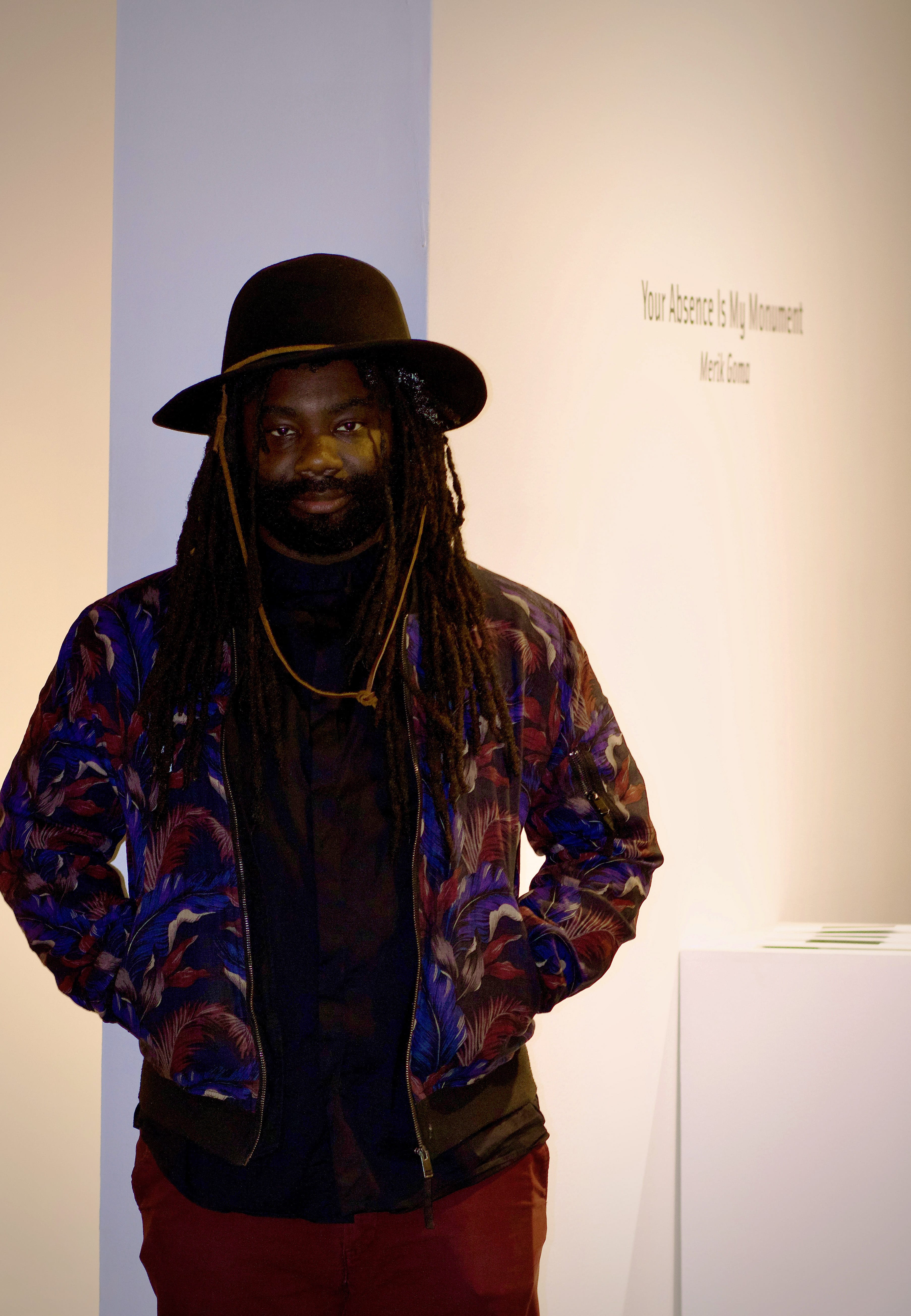 You’re invited to a conversation between artist Merik Goma and Moriah Peoples of The Amistad Center, hosted by Visual Arts Manager Cody Boyce. Goma will discuss his work and process behind Your Absence Is My Monument, a moving exhibition that speaks to the isolation and pain experienced during the pandemic. Goma is one of six recipients of the 2021 Real Art Awards, which supports emerging artists in New England, New York, and New Jersey. “After the loss of a close friend and then my grandmother, I came face to face with a new understanding of absence in my life. Grappling over this concept and my internal dialogue, I wondered if there is ever room for absence to exist. And by invoking the presence of absence, does something else take its place? Looking at the climate of this moment, this idea resonates with how so many of us are without family, stability, and certainty on a massive scale. Reflecting on my narrative practice of set building and re-examining contemporary themes, it feels urgent to bring this work into a public space.” Merik Goma is a New Haven-based photographer and recent graduate of the NXTHVN Studio Fellowship Program, an arts incubator founded by renowned artist Titus Kaphar. Goma builds intricate sets within his studio that he uses both as subjects of tableaux and as backdrops for narrative portrait photography. His technique is painterly in execution, with close attention paid to color and lighting. His work has been shown by Tilton Gallery, and is in the collection of Yale University. In 2021, Goma was selected as the Joyce C. Willis Artist in Residence by the Amistad Center for Arts & Culture at the Wadsworth Atheneum. As part of the residency, Goma will present a solo exhibition in 2023.
 Click here to visit the artist’s website. Click here to learn more about the Real Art Awards.
Merik Goma