RJ LaRussa
Real Art Ways presents a solo exhibition by NYC based video artist RJ LaRussa.
Through video, sculpture, and digital collage “Meaningful Adjacencies” examines the psychological trauma of the CIA’s torture techniques, and the destruction of the evidence by government personnel. “Meaningful Adjacencies” draws focus to the portion of post 9/11 abuses perpetrated by the United States. This exhibit focuses on the CIA Rendition, Detention, and Interrogation (RDI) program as it exists within both extremes: it is simultaneously the most brutal, repressive, institutionally sanctioned program to come after 9/11, as well as the most obfuscated, laundered, and pardoned practice at the highest levels. The “information” obtained under torture in CIA Black Sites around the world continues today to serve as justification for the United States’ war on terror, just as the RDI program itself may still exist in one form or another, despite being officially ended. “Meaningful Adjacencies” memorializes those who were detained and brutalized. In doing so, we are forced to reexamine our relationship to global violence, and narratives of US innocence that are used to gain cultural consent for the continuation of these wars.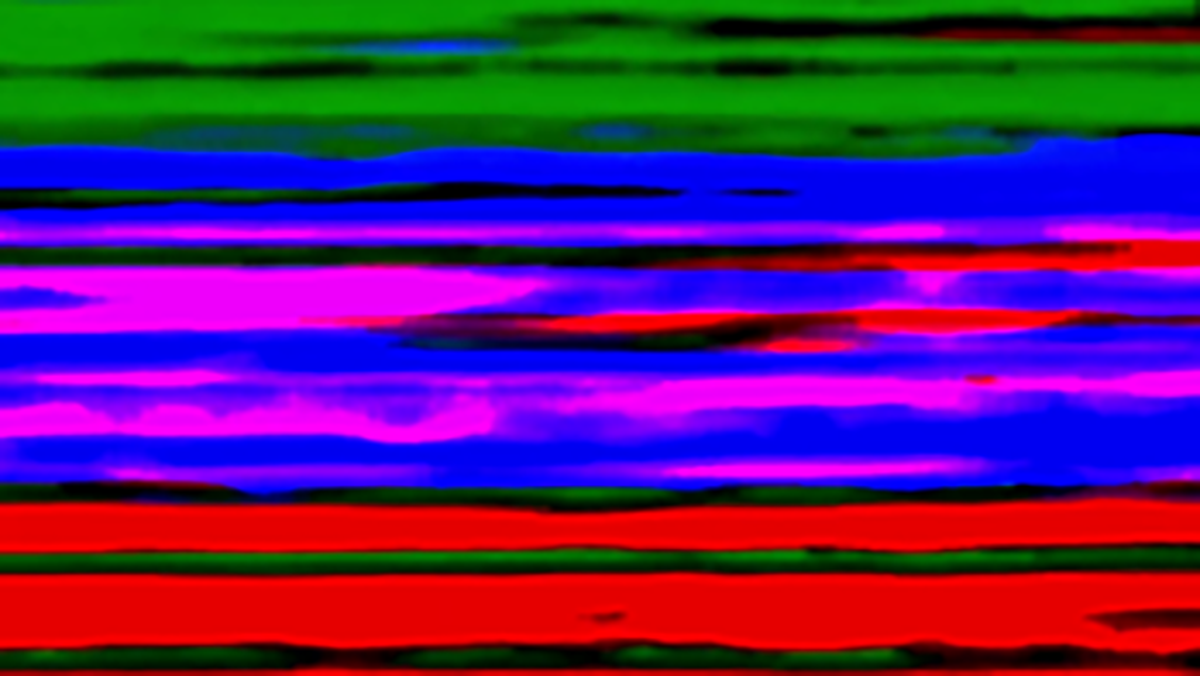 SIGHTGREEN: 2021, Digital macro video, Induced VHS Generation Loss, Audio collage.
About the Artist
RJ LaRussa is a Director of Photography and working locally in New York City. Their work has been screened at SXSW, Chicago Critics Fest, Frightfest, L’Étrange Festival, and the Denver Film Festival among others, and has been covered by the Zeiss Lenspire blog, Aislin Magazine, and the Greater Hartford Arts Council. Their most recent short film work THE MUNDANES, by Magic Society Pictures, premiered at SXSW 2023. RJ is a graduate of the 2023 Respectability Entertainment Lab. LaRussa specializes in story-focused projects across both feature and short narrative, music video, and documentary work. He strives to bring naturalism and experimental techniques together to create visuals that serve the story of each individual project. RJ’s sensitive approach to their subjects is informed by their experiences as a neurodivergent artist. The relationship between people and the world around them is integral to their work as a storyteller. For more information, click here.
On Sunday, February 25 at 3pm, Real Art Ways presents a performance from Tomeka Reid Quartet and Tomas Fujiwara’s 7 Poets Trio. Tickets are $15 general admission, $12 for RAW members, $5 for students. 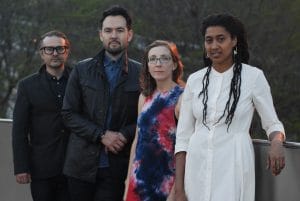
Tomeka Reid Quartet
Tomeka Reid is one of the most original, versatile, and curious musicians to emerge from Chicago’s bustling jazz and improvised music community over the last decade. As a cellist, composer, and bandleader, Reid melds the Western classical tradition with modes rooted in the African diaspora and avant-garde to produce a rich and textured palette of sounds. She participates in several musical groups as a member or bandleader and composes and arranges works for small and large ensembles with varied instrument combinations. Reid released her debut recording as a bandleader, Tomeka Reid Quartet, in 2015 with the Tomeka Reid Quartet, featuring herself (cello), Jason Roebke (bass), Mary Halvorson (guitar), and Tomas Fujiwara (drums). The album provided a vibrant showcase for the cellist’s improvisational acumen, as well as for her dynamic arrangements and compositional ability. The quartet’s second album, Old New (2019) has been described as “fresh and transformative…striking out in bold, lyrical directions, with plenty of Reid’s singularly elegant yet energetic and sharp-edged bow work.” A new record is anticipated in spring 2024.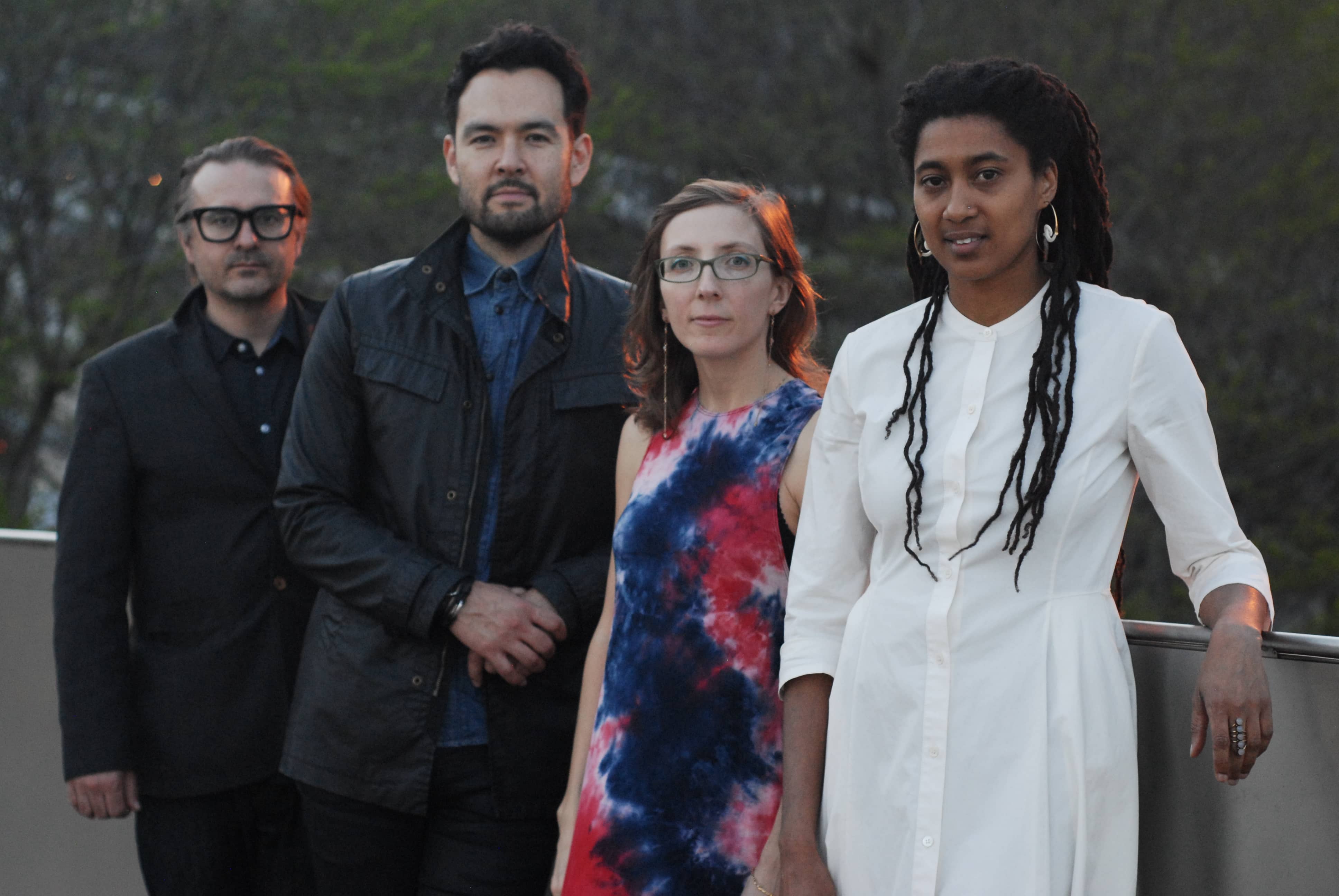
Tomas Fujiwara’s 7 Poets Trio
Tomas Fujiwara assembled his 7 Poets Trio with Patricia Brennan and Tomeka Reid for the first time during his residency at The Stone in April 2018, after having previously played with Patricia in Michael Formanek’s Ensemble Kolossus, and with Tomeka in her Quartet. As has been the case with his past ensembles (Tomas Fujiwara & The Hook Up, The Tomas Fujiwara Trio, Triple Double, and the Tomas Fujiwara Percussion Quartet), Fujiwara brought together two musicians who had never played together before, creating a brand new combination of musical personalities. The rapport was instantaneous and their debut was described by All About Jazz as “a meshing of chamber jazz, modern classical composition and improvisation, although most of Fujiwara’s music sounded well organized in advance. All three players rose to an individual expression, working as a composite unit to deliver solo embellishments. Roles were malleable, as the listener decided whether everyone was soloing, or no-one. All three members were devoted to establishing a sensitive group consciousness, and they succeeded eminently.” Their eponymous debut came out in 2019 on Rogue Art, with a follow up album, Pith, released in September 2023 on Out of Your Head Records.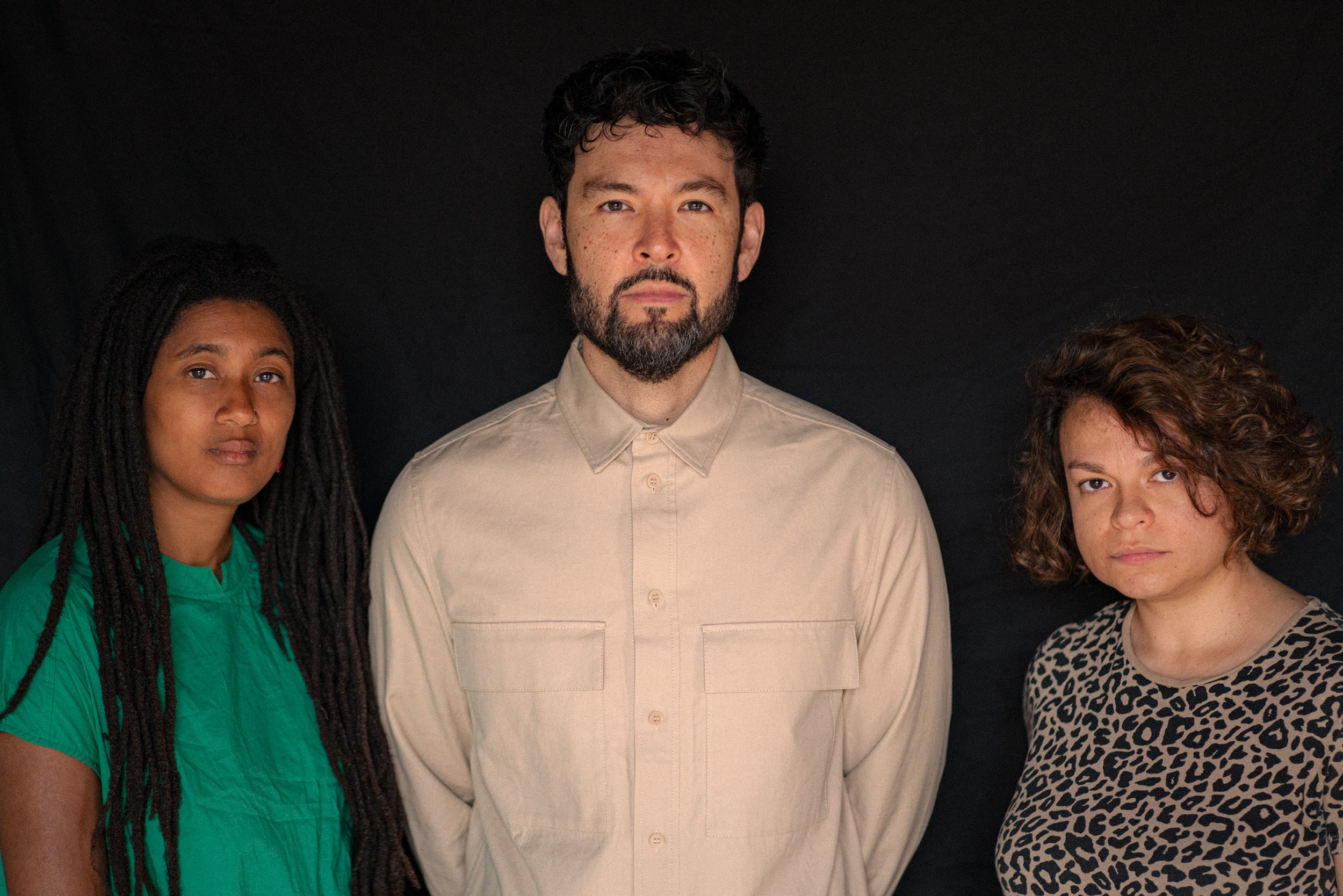
Please join us on Saturday, January 13th at 3pm for Saturday Soup; a discussion with Simon Benjamin and writer Gervais Marsh about Benjamin’s current exhibition sub–marine: Jeweler of Memory.
Real Art Ways presents an artist talk with Jamaican artist Simon Benjamin on Saturday, January 13 at 3PM. The exhibition is on view through Sunday, January 14 2024. Gallery hours are everyday from 2-9pm. Admission is free. Real Art Ways is located at 56 Arbor Street, Hartford. Join Simon Benjamin and writer, curator, and scholar Gervais Marsh for Saturday Soup, an informal conversation on the occasion of Benjamin’s solo exhibition at Real Art Ways—and the culminating event of his 2022 Real Art Award Exhibition. In the spirit of his Jamaican roots, cups of soup will be served. Catered by Fire & Spice in Hartford. For more information on Simon and his exhibition at Real Art Ways, click here.About Gervais Marsh
Gervais Marsh is a writer, curator and scholar whose work is deeply invested in Black life, concepts of relationality and care. They received a PhD in Performance Studies from Northwestern University and are currently a Helena Rubinstein Curatorial Fellow with the Whitney Museum Independent Study Program. Their writing has been published in several books and exhibition catalogs including Denzil Hurley (monograph), Nka: Journal of Contemporary African Art, Forgotten Lands Vol. 5, KMAC Museum Triennial (2022), as well as online art publications such as Hyperallergic, C Magazine, Brooklyn Rail, ARTS.BLACK, Musée Magazine, and PREE: Caribbean Writing, among others.
Live music, art exhibitions, DJ. Come as you are.
Everybody is welcoming, conversations abound, people connect. Come with friends, come by yourself, hangout. Creative Cocktail Hour is a great way to meet new people!Music/DJ:
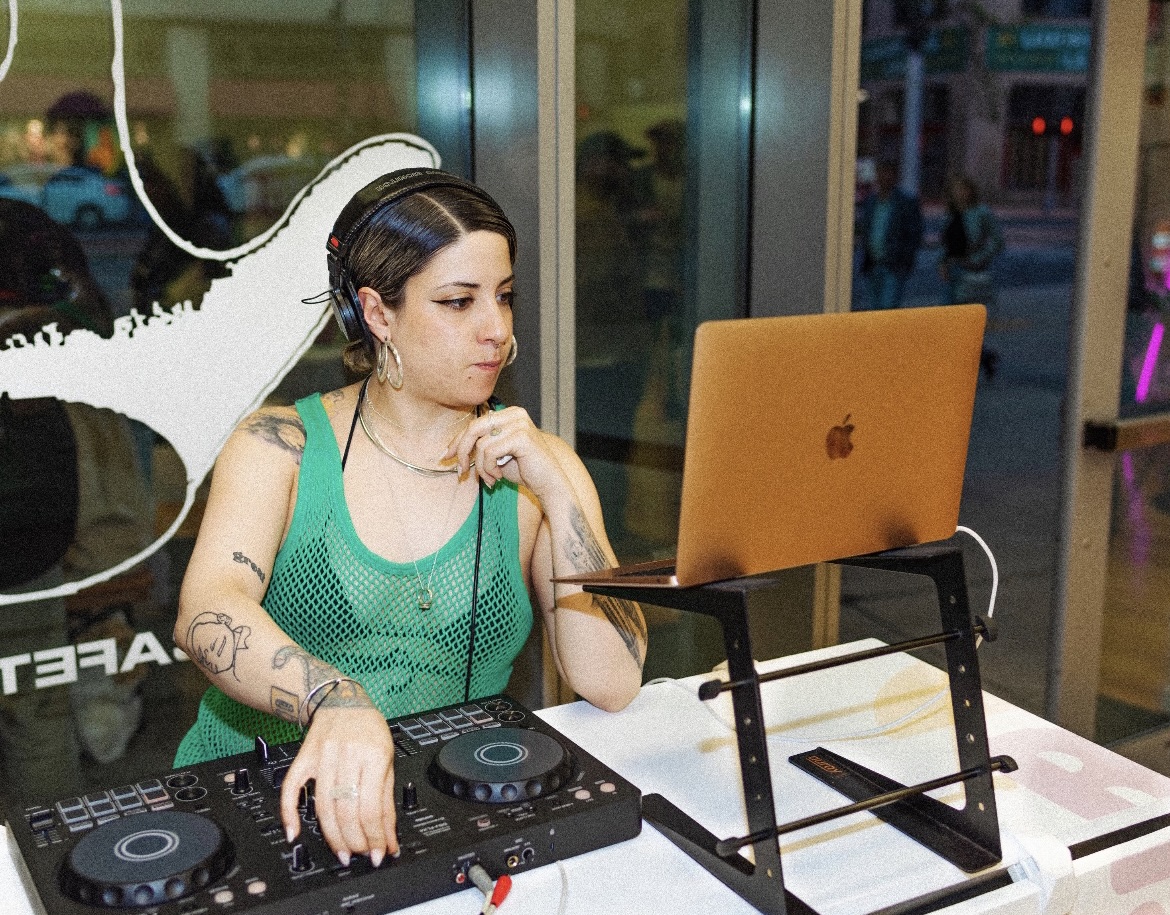
DJ Kasey Cortez
Kasey Cortez is a multidisciplinary artist currently working to merge her many realms of creative expression. She has delved into worlds of music, theatre, photography, design, fashion, & installation art. Her work across mediums is inspired by a deep fascination with collective trends/culture, the minutiae of human choice & the mundane passing of time. She’s also a yoga teacher of nearly 10 years, & DJing has become her new favorite form of expression!
Tarot and Palm Readings from Adam Latin!
Limited Space available from 7-9pm. Adam Latin is a tarot and palm reader who has been working professionally since 2001. He has read for tens of thousands of people since he started reading. He offers support in areas around personal empowerment, relationships, career, family communication, love, and trauma. He wants a deeper sense of victory and passion for his clients.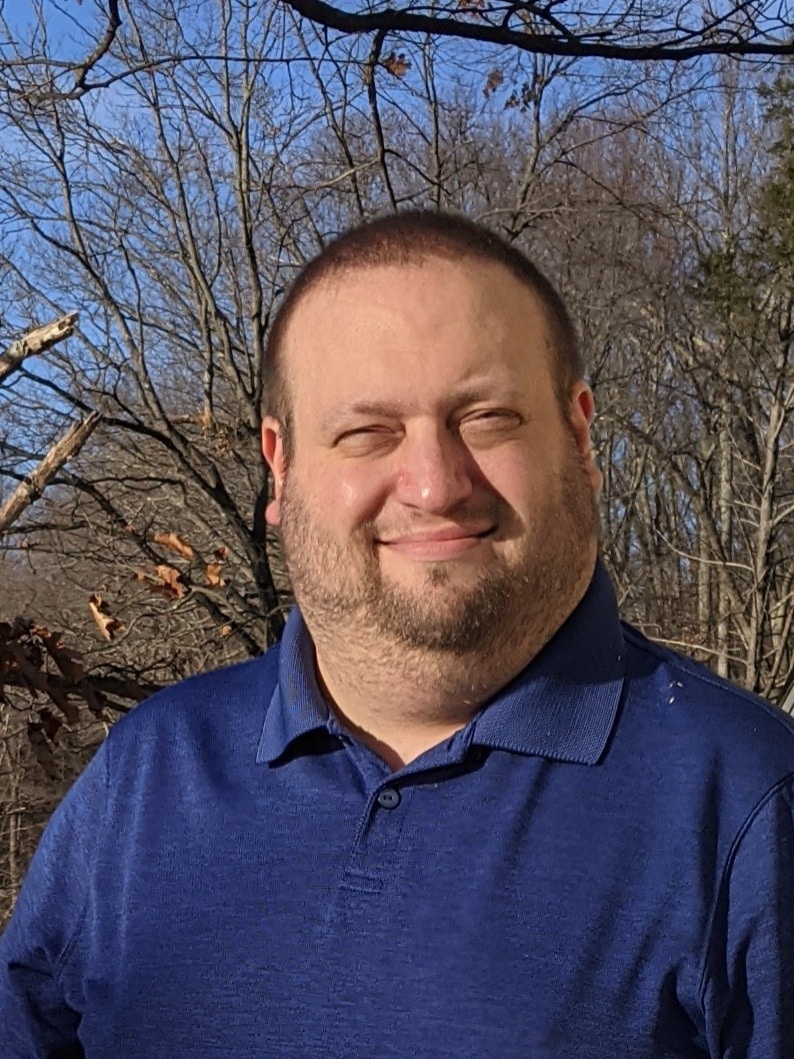
Art Exhibitions
Exhibition opening from RJ LaRussa. Langit Lupa (Heaven and Earth) by Bhen Alan Unknown, Unknowns by Steven DiGiovanni Tubular Times curated by Terri C. SmithFood Truck
Muncher’s International, authentic Jamaican cuisine.Hands-on art activities led by Real Art Ways Staff
Clothing as Disruptor
Curated by Alva Greenberg
Real Art Ways presents a collection of work from 26 artists curated by Alva Greenberg
Clothing conveys impressions of social background, economic status and ethnicity. Like physical features, it is one of the most common means used to project ourselves and understand others. This inclination to categorize others is also a way of controlling our responses to them. How often do we subconsciously imbue clothing with a significance which is misleading?
The altered and uninhabited clothing in No Bodies disrupts these autonomic responses by playing with perceptions of materiality, cultural identity, relationships, political beliefs and portraiture itself. Being free of physicality, the works in No Bodies force us to confront assumptions, as well as the ever-growing societal compartmentalization of people and behavior and the #socialmedia which increasingly rules our thinking.
What does it mean when we deconstruct a garment by unraveling it or burning it or turning it into another material? What does clothing symbolize when there never was or will be a body inside?
Featured artwork by
Reginald Dwayne Betts, John Boone, Marsha Borden, Rachel Breen, Chris Burden, Patrick Carroll, Susan Clinard, Hannah Conradt, E.V. Day, Lesley Dill, Anindita Dutta, Nina Dwin, Carlos Estévez, Kathryn Frund, Jonathan Herrera Soto, Jesse Krimes, Whitfield Lovell, Adriana Marmorek, Carol Paik, Sidney Russell, Karen Shaw, Jaune Quick-to-See Smith, Micki Watanabe Spiller, Cindy Tower, Cleo Wilkinson, and Cybèle Young.[smartslider3 slider=”34″]
About the Curator
Alva Greenberg is a curator and artist based in Connecticut. She started her career as the co-owner and editor of The Gazette, a weekly newspaper in Old Lyme, CT. From 1997-2009, she ran ALVA Gallery, a contemporary art gallery in New London, CT dedicated to promoting mid-career artists working in all disciplines. In 2006, Alva Greenberg was a recipient of the Eugene O’Neill Center’s “25 of Connecticut’s most Uncommon Women” award and in 2018 she received the State of Connecticut Governor’s Patron of the Arts award. Ms. Greenberg currently serves on several boards including the French American Museum Exchange (FRAME), Romare Bearden Foundation and the Connecticut Arts Foundation. Past boards include the Florence Griswold Museum and Arttable. Jonathan Herrera Soto, Te Encontrare Donde Crecen Rios Bajos, 2020
On March 29th, we hosted No Bodies: Artists in Conversation; a discussion with contributing artists and designers about the work and concepts explored in this exhibit. CLICK HERE to watch.
CLICK HERE to listen in on a lively conversation with artists Carlos Estevez, Lesley Dill, Micki Watanabe Spiller and curator Alva Greenberg about this expansive group exhibit focusing on the ideas around garments and embodiment.
CLICK HERE to watch Anindita Dutta’s performance of प्रदक्षिणा | Pradakshina | Circumambulation. This performance is in relation to our No Bodies: Clothing as Disruptor exhibit and took place during April’s Creative Cocktail Hour.
WFSB Channel 3 News Coverage clip 1 WFSB Channel 3 News Coverage clip 2 With funding from the Andy Warhol Foundation for the Visual Arts
An experience of music imagined and created in real time. This series runs from September 2023-May 2024. Check out the full schedule here!
Febuary’s Performance:
Matthew Shipp – Piano
“Monumental.” – Chicago Tribune “Shipp is the connection between the past, present and future for jazz heads of all ages.” – DownbeatMatthew Shipp is a pianist, bandleader, and composer who creates an animated melodic tone by using a mix of traditional and free jazz. Shipp was raised in Wilmington, Delaware where he began playing piano at six years old. Shipp attended the University of Delaware for one year, then the New England Conservatory of Music. He has since gone on tour around the world and has created, recorded, and performed with numerous musicians while simultaneously improving his repertoire. To Learn More About Matthew Shipp: Facebook Website
Jerome Deupree – Drums
Jerome Deupree is an American musician, based in Massachusetts. He is best known as the original drummer in the alternative rock band Morphine. Deupree started playing drums at the age of six, with the help of his two older brothers. Deupree has played frequently with jazz guitarist and Improvisations Now curator Joe Morris, performing at Real Art Ways several times in the past. To learn more about Jerome Deupree: Instagram Facebook WebsiteJoe Morris – Guitar
“The preeminent free music guitarist of his generation.” – Downbeat Magazine “One of the most profound improvisers at work in the U.S.” – WIRE Magazine “The guitar revolutionary to pay attention to.” – The Boston PhoenixJoe Morris born in New Haven Connecticut in 1955. He began playing guitar at the age of 14 first playing rock music, progressing to blues, then to jazz, free jazz and free improvisation. He released his first record Wraparound (riti) in 1983. He has composed over 200 original pieces of music. Joe Morris and Real Art Ways have a longstanding creative relationship. Joe has performed multiple times since the 1980’s and has organized concert series of improvisational music for several years. To learn more about Joe Morris: Facebook Website
Steven DiGiovanni
Real Art Ways presents a solo exhibition by New Haven based painter Steven DiGiovanni.
In the early 70’s, Steven DiGiovanni’s father worked privately as a safety engineer, consultant and investigator. His clients were attorneys in civil cases involving personal injury or death. Steven was an adolescent at the time and often accompanied his father to lend a hand with the tape measure or help record measurements. His father would visually document the sites and all the relevant details with a Polaroid camera.
His father’s forensic photographs were often crudely composed and illuminated with a flash. Subjects included broken stairs, cracked sidewalks or busy intersections. Each image, was imbued with a narrative of misfortune. Collectively they described a world of chaos and human vulnerability and fragility.
Although these photographs are gone, many of these paintings are based upon pictures that Steven took in his Westville, New Haven neighborhood. Others are based on photos taken around Nagoya and Tokyo, Japan. In all, Steven DiGiovanni seeks to navigate in the liminal terrain between the disinterested aesthetics of forensic photography and the poetics of space and narrative.
About the Artist
Steven DiGiovanni is a graduate of the University of South Carolina and the Maryland Institute College of Art. He currently lives and works in New Haven, Connecticut as an Adjunct Professor at Southern Connecticut State University and Norwalk Community College. DiGiovanni has works in the collections of Yale University Art Gallery and the New Britain Museum of American Art. Bhen Alan
Exhibition Documentation (PDF)
Real Art Ways presents a solo exhibition by 2022 Real Art Award recipient Bhen Alan.
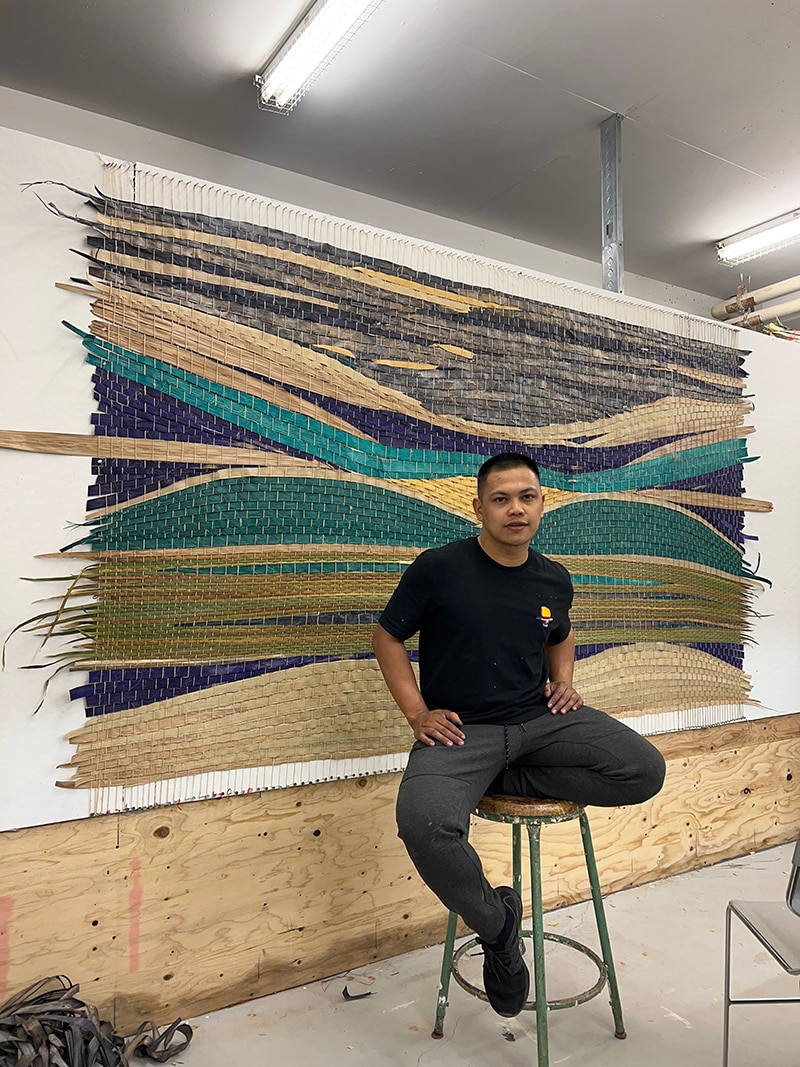
Bhen Alan’s Langit Lupa (Heaven and Earth) exhibition spotlights the banig — a Filipino indigenous mat — to investigate the artist’s relationship with cultural objects, relocation, diaspora, and experiences as an immigrant. The works in the exhibition are influenced by the artist’s Fulbright research and fieldwork in the Philippines in 2022-2023. Though it looks back on the history, making, ritual, and function of a traditional banig, the artist abstracts all of these elements as a way of finding new meaning, new location, and new interaction.
About the Artist
Bhen Alan (b.1993) was raised in Tuguegarao City, Cagayan, Philippines. He grew up dancing traditional folk and cultural dances to preserve their culture. He immigrated to Toronto, Canada when he was 17 years old before settling in the United States. Bhen is a visual artist, dancer, and educator. In 2019, he received his Bachelor of Fine Arts in Painting at the University of Massachusetts, Dartmouth where he was a full scholar. In the same year, he pursued a Business Accelerator Certificate from the Entrepreneurship For-All in SouthCoast Massachusetts. He earned his Master of Fine Arts in Painting and Certificate in Collegiate Teaching in Art and Design at the Rhode Island School of Design. He is a U.S. Fulbright scholar of 2022-2023 in the Philippines, where he researched and worked alongside master weavers of indigenous tribes in 14 different islands. He has exhibited in the Museum of Fine Arts Boston, Praise Shadow Gallery in Brookline, Massachusetts, 808 Gallery at Boston University, Rhode Island School of Design (RISD), Hunter Gallery in Middletown, Rhode Island, EIK Gallery at Yale University, Culture Lab LIC in New York, the Providence Public Art Library, St. Botolph Club Foundation in Boston, John B. Aird Gallery in Toronto, Canada, Shockboxx Gallery in California, Providence Art Club, Bowersock Gallery in Provincetown, Massachusetts, at the New Bedford National Historical Park and many more. He organized the first Filipino Heritage Festival during the 2022 PVD Fest in Providence, Rhode Island. He has received awards such as the Emerging Artist Award and Mary Shannon Award for Public Art at St. Botolph Club Foundation, Boston, MA, Emerging Artist Award from Real Arts Award, 2021-2022 RISD Graduate Commons Grant, and UMass Dartmouth Summer Research Grant.
About the Real Art Awards
The Real Art Awards is an annual opportunity for emerging artists living in New England, New Jersey, or New York. The open call, offered with no entry fees to artists, attracts hundreds of applicants each year, of which 6 artists are chosen. Selected artists receive a solo exhibition, with a commissioned essay, professional documentation, and a cash prize of $2,500. The 2022 Real Art Awards was juried by multidisciplinary artist Carlos Motta, curator and creative strategist Yona Backer, and Real Art Ways Executive Director Will K. Wilkins. The 2022 Real Art Awards is supported in part by awards from the National Endowment for the Arts and the Edward C. & Ann T. Roberts Foundation. 
 VIEW ADDITIONAL SELECT PAST EXHIBITIONS
An experience of music imagined and created in real time. This series runs from September 2023-May 2024. Check out the full schedule here!
January’s Performance:
Mark Helias – Bass
Mark Helias is a renowned bassist and composer who has performed throughout the world for more than three decades. After his studies at Rutgers University (B.A. 1974) and The Yale School of Music (M.M. 1976), he began his international career in the Anthony Braxton Quartet. Up to the present time he has performed with a panoply of world class artists including: Edward Blackwell, Anthony Davis, Dewey Redman, Uri Caine, Marcel Khalife, Abbey Lincoln, Oliver Lake, Andrew Cyrille, Marilyn Crispell, Julius Hemphill, Don Byron, Bobby Bradford, Barry Altshul, Ray Anderson, Michael Moore, Don Cherry, Cecil Taylor, and Gerry Hemingway. A prolific composer, Helias has written music for two feature films as well as chamber pieces and works for large ensemble and big band. His orchestra piece “Stochasm” was premiered by the American Composers Orchestra in June of 2011. He has produced many recordings for other artists including Ray Anderson, Tony Malaby, Bobby Previte, Jerome Harris, and Mark Dresser. His trio, Open Loose with Tony Malaby and Tom Rainey, has become an archetypal improvising ensemble on the New York scene. He continues performing and recording with BassDrumBone, a four decade long collaboration with Gerry Hemingway and Ray Anderson. Mr. Helias performs solo bass concerts and can also be heard in the innovative bass duo, “The Marks Brothers”, with fellow bassist Mark Dresser. He teaches at Sarah Lawrence College, The New School University and SIM (School for Improvisational Music).Anna Webber – Tenor Saxophone and Flute
“Visionary and captivating” – The Wall Street Journal “Music that appeals to the rest of the body” – NPR Jazz Critics PollAnna Webber is a flutist, saxophonist, and composer whose interests and work live in the aesthetic overlap between avant-garde jazz and new classical music. In May 2021 she released Idiom, a double album featuring both a trio and a large ensemble, and a follow-up to her critically-acclaimed release Clockwise. Her 2020 release, Both Are True (Greenleaf Music), co-led with saxophonist/composer Angela Morris, was named a top ten best release of 2020 by The New York Times. She was recently named a 2021 Berlin Prize Fellow and was voted the top “Rising Star” flutist in the 2020 Downbeat Critic’s Poll. Webber is a 2018 Guggenheim Fellow. She has additionally been awarded grants from the Copland Fund (2021 & 2019), the Shifting Foundation (2015), the New York Foundation for the Arts (2017), the Conseil des arts et des lettres du Québec, and the Canada Council for the Arts and residencies from Exploring the Metropolis (2019), the MacDowell Colony (2017 & 2020), the Millay Colony for the Arts (2015), and the Brush Creek Foundation for the Arts (2014). Originally from British Columbia, Webber studied music at McGill University in Montreal before moving to New York City in 2008. She holds master’s degrees from both Manhattan School of Music and the Jazz Institute Berlin.
Joe Morris – Guitar
Joe Morris is a composer/improviser multi-instrumentalist who plays guitar, double bass, mandolin, banjo, banjouke, electric bass and drums. Morris has performed and/or recorded with many of the most important contemporary artists in improvised music including Braxton, Evan Parker, John Zorn, Ken Vandermark, Tomeka Reid, Fay Victor, Tim Berne, William Parker, Sylvie Courvoisier, Peter Evans, David S. Ware, Joe Maneri, Dewey Redman, Wadada Leo Smith, Leroy Jenkins, Lawrence D. “Butch” Morris, Marshall Allen, Barre Phillips, Barry Guy, Matthew Shipp, Gerald Cleaver, and many others. He has been curating Improvisations Now at Real Art Ways for many years. To learn more about Joe Morris, please visit his website.Creative Cocktail Hour (CCH) returns for December! on 12/21 from 6-10pm, enjoy live music from several local musicians, exhibitions and openings, hands-on art making activities, food and beverages, and community!
Live Music:
DJ Kasey Cortez: Kasey Cortez is a multidisciplinary artist currently working to merge her many realms of creative expression. She has delved into worlds of music, theatre, photography, design, fashion, & installation art. Her work across mediums is inspired by a deep fascination with collective trends/culture, the minutiae of human choice & the mundane passing of time. She’s also a yoga teacher of nearly 10 years, & DJing has become her new favorite form of expression! Exhibitions:
Exhibition Opening from Bhen Alan:
Langit Lupa (Heaven and Earth) by Bhen Alan (Exhibition Opening): this exhibition spotlights the banig – a Filipino indigenous mat – to investigate the artist’s relationship with cultural objects, relocation, diaspora, and experiences as an immigrant. Bhen Alan is the recipient of a 2022 Real Art Award. On view through Sunday, January 28. Opening Reception 6-8pm
Exhibition Opening from Steven DiGiovanni
In this exhibition, Steven DiGiovanni seeks to navigate in the liminal terrain between the disinterested aesthetics of forensic photography and the poetics of space and narrative. These paintings are based on pictures that Steven took in his Westville, New Haven neighborhood. Others are based on photos taken around Nagoya and Tokyo, Japan.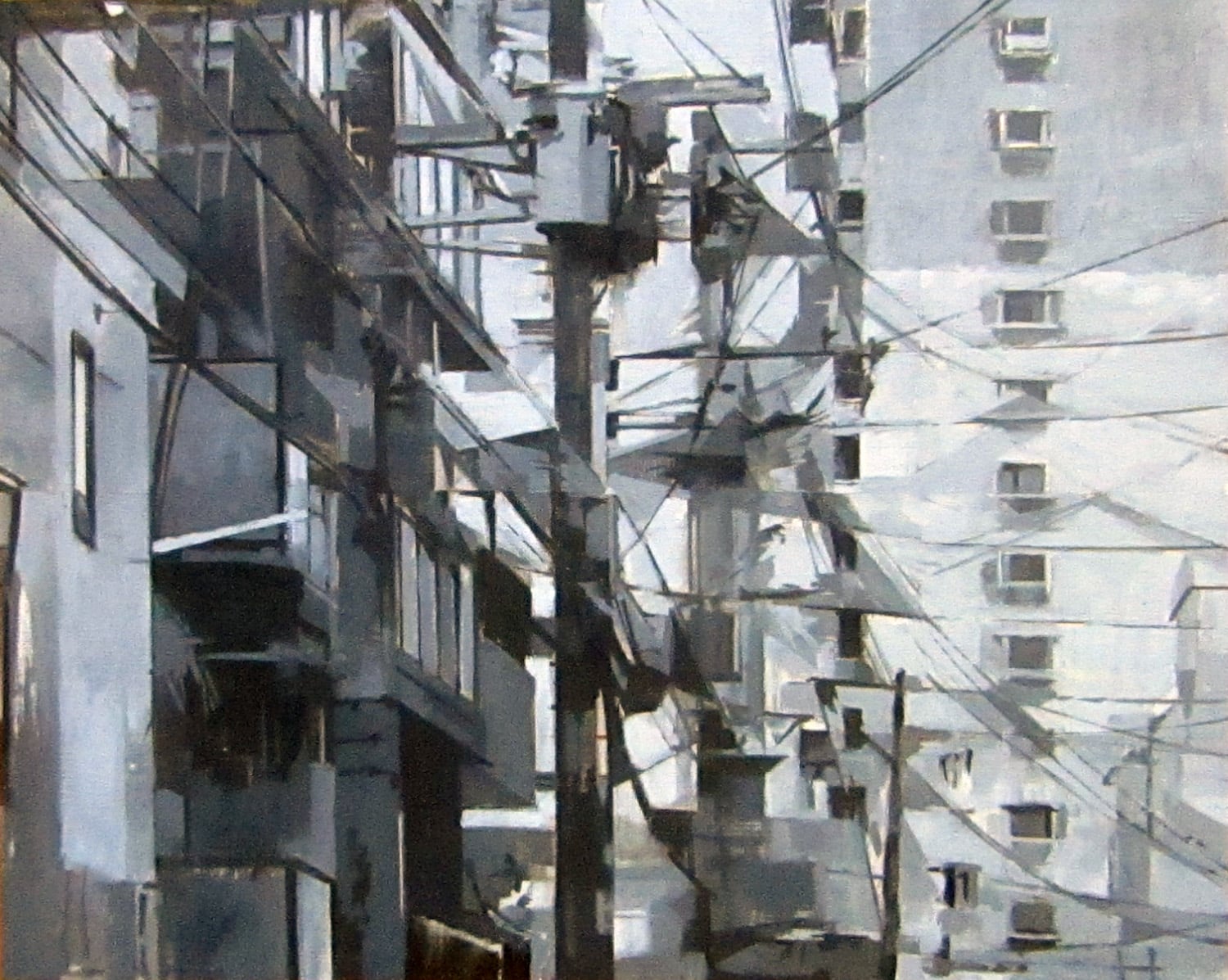 Opening Reception 6-8pm sub-marine: jeweler of memory – Simon Benjamin Tubular Times – Curated by Terri C. Smith
Food Truck:
Nibbles N’ Noms: gourmet food truck!Hands-on art making activities led by Real Art Ways staff!
Above image:
Mariana Iacono and Juan De La Mar, El VIH se enamoró de mi (HIV Fell in Love With Me), 2024. Commissioned by Visual AIDS for Red Reminds Me…Day With(out) Art 2023: Red Reminds Me…
Real Art Ways is proud to partner with Visual AIDS for Day With(out) Art 2024 by presenting Red Reminds Me…, a program of seven videos reflecting the emotional spectrum of living with HIV today. Red Reminds Me… will feature newly commissioned videos by Gian Cruz (Philippines), Milko Delgado (Panama), Imani Harrington (USA), David Oscar Harvey (USA), Mariana Iacono and Juan De La Mar (Argentina/Colombia), Nixie (Belgium), Vasilios Papapitsios (USA). Through the red ribbon and other visuals, HIV and AIDS has been long associated with the color red and its connotations—blood, pain, tragedy, and anger. Red Reminds Me… invites viewers to consider a complex range of images and feelings surrounding HIV, from eroticism and intimacy, mothering and kinship, luck and chance, memory and haunting. The commissioned artists deploy parody, melodrama, theater, irony, and horror to build a new vocabulary for representing HIV today. The title is drawn from the words of Stacy Jennings, an activist, poet, and long-term survivor with HIV, who writes: “Red reminds me, red reminds me, red reminds me…to be free.”* Linking “red” to freedom, Jennings flips the usual connotations of the color and offers a new way of thinking about the complexity of living with HIV. Just as a prism bends and refracts light, Red Reminds Me…, expands the emotional spectrum of living with HIV. It shows us that while grief, tragedy, and anger define parts of the epidemic, the full picture contains deeper, nuanced, and sometimes contradictory feelings. This video will be continuously screening (on loop) from December 2, – December, 4 from 1pm-7pm in our Video Gallery. Visual AIDS is a New York-based non-profit that utilizes art to fight AIDS by provoking dialogue, supporting HIV+ artists, and preserving a legacy, because AIDS is not over. *Jennings recites this poem in the video Here We Are: Voices of Black Women Who Live with HIV, created by Davina “Dee” Conner and Karin Hayes for Day With(out) Art 2022: Being and Belonging.Video Synopses
Gian Cruz, Dear Kwong Chi In Dear Kwong Chi, Cruz creates a video letter to the late artist Tseng Kwong Chi, drawing from the experience of living with HIV in diaspora. Across continents and decades, Kwong Chi’s legacy acts as an anchor for Cruz amongst limited representations of Asian narratives in AIDS histories. Milko Delgado, El Club del SIDA Taking its title from a sensational telenovela episode, El Club del SIDA cycles through a lifetime of heavily stigmatizing images about HIV and AIDS. Delgado plays with multiple aesthetics—documentary, horror, comedy—to explore the various relationships he has had with AIDS over the course of his life. Imani Harrington, Realms Remix Through a collage of poetry and archival images, Realms Remix traces memories and sensations of an AIDS past that continue to haunt the present. David Oscar Harvey, Ambivalence: On HIV & Luck Ambivalence: On HIV & Luck tackles the disorienting experience of existing with a manageable condition that our present culture insists on representing in terms of its bleak past. Interested in figuring HIV differently, the film presents a series of visual puns merging the iconography of HIV and AIDS with popular symbols of luck. Mariana Iacono and Juan De La Mar, El VIH se enamoró de mi (HIV Fell in Love With Me) HIV Fell in Love With Me tells the story of a woman with HIV embracing her sexuality and reconnecting with her pleasure. Filmed with an erotic aesthetic, the video reflects a pursuit towards sexual justice and autonomy for women living with HIV. Nixie, it’s giving Through home videos, archival footage and textile landscapes, it’s giving explores various forms of family across time. The artist’s domestic life is paired with archival video of queer and trans chosen families mirroring small acts of joy, resistance, and sustenance. What does it mean for an HIV+ person, who carries the history and present of the AIDS-crisis in their DNA, to foster new life? Vasilios Papapitsios, LUCID NIGHTMARE Papapitsios describes LUCID NIGHTMARE as a “meditation on how we can(not) heal in the environments that make us sick, from the perspective of an infected neurodivergent faggot.” Combining auto-fiction with magical realism, Papapitsios humorously reimagines narratives around mental health and chronic illness.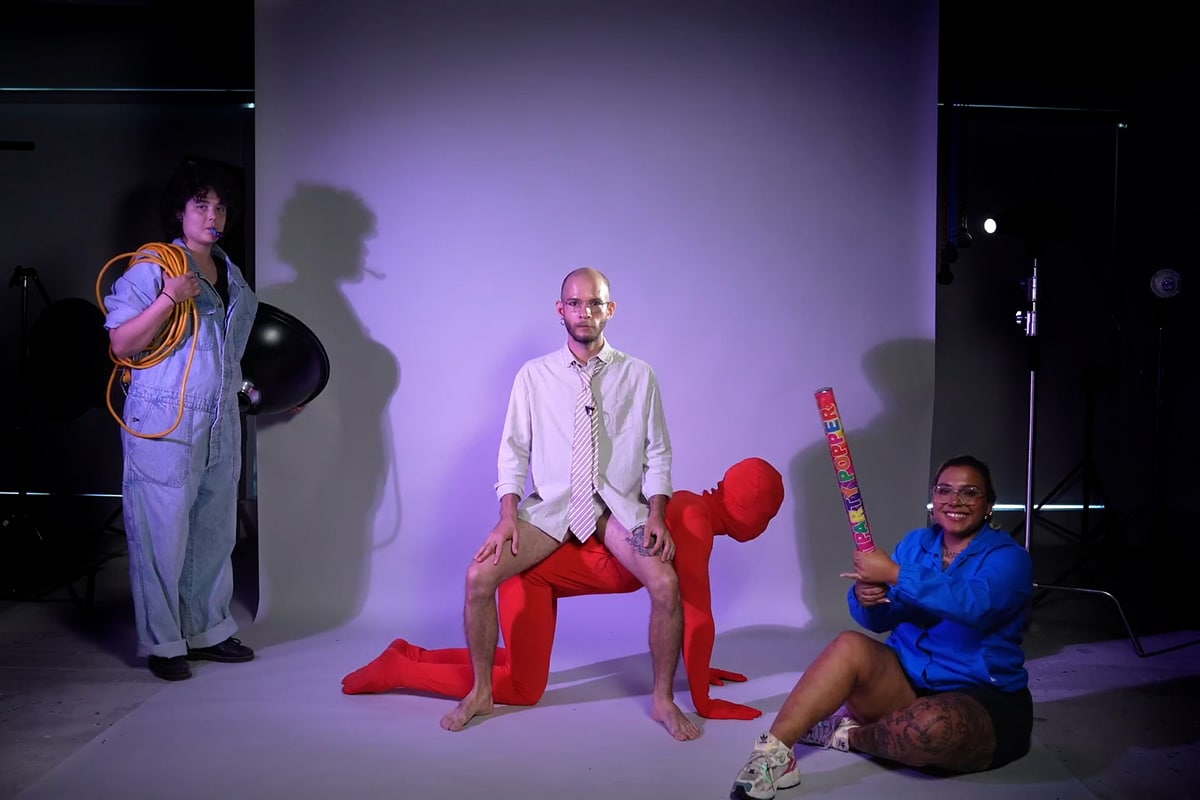
Artist Biographies
Gian Cruz (he/him) is a Filipino artist, researcher, and arts worker. His artistic practice is rooted in photography, art theory, and criticism and intersects with cinema, performance, and HIV/AIDS activism within Southeast Asian frameworks. He has worked with the National Museum of Modern & Contemporary Art, Korea; Jeu de Paume, Paris; Picto Foundation, Paris; Palais Galliera, Paris; Musée de la Mode de la Ville de Paris; La Biennale di Venezia; the Japan Foundation; Haus der Kulturen der Welt, Berlin; Bienal de Curitiba; Blackwood Gallery, Toronto; Pride Photo Award, Amsterdam; and 4A Centre for Contemporary Art, Sydney. Juan De La Mar (they/them) is a lawyer, HIV+ activist, and artist from Colombia. Their documentary debut, De Gris a POSITHIVO, has won 16 awards and screened at 52 festivals worldwide. They have performed at the Bogotá Museum of Modern Art (MAMBO) and were selected as the 2024 HIV Culture Residency at the Centro de Arte Contemporáneo de Quito. As an activist, they have worked with the Latin American HIV-Positive Youth Network (J+LAC) and they currently coordinate Bogota’s Fast-Track Cities strategy to accelerate the response to HIV/AIDS. Milko Delgado (he/him) is a transdisciplinary artist whose cultural practice integrates various forms of research and knowledge production, primarily within the realms of visual arts, video, performance, pedagogy, and cultural management. Delgado’s work explores the intersections between the boy and nature, opening dialogue about identity, coloniality, extraction, health, and land. Delgado graduated from the International School of Film and Television – EICTV in Cuba. His work has been exhibited at the Museo de Arte Contemporáneo de Panamá, Teorética (Costa Rica)/Fresh Milk (Barbados), New York Latin American Art Triennial, and the Center for Visual Arts (Denver). Imani Harrington (she/her) is a writer, author and conceptual artist who has documented on the conditions of women since the age of 25. She was an editor for the anthology Positive/Negative: Women of Color and HIV/AIDS: A Collection of Plays (2002) and her play Love & Danger (1995) was among the first to address women and HIV. Her other titles include The Communal Plays and Other Narratives, On Writing I, ISSHOWAT, andHouse of Leaven. David Oscar Harvey (he/him) is a psychotherapist and psychoanalysist-in-training, living in Philadelphia. His essay film on HIV criminalization, RED RED RED, has screened at film festivals and art spaces internationally. His writing on identity, HIV/AIDS and film and media have appeared in numerous publications. Harvey is an active member in the artist and activist collective What Would an HIV Doula Do?. Mariana Iacono (she/her) is a social worker, media activist, and educator who works with networks of people living with HIV in Latin America and the Hispanic Caribbean for more than 10 years. She is a co-founder of several HIV organizations in Argentina including Argentine Network of Positive Youth and Adolescents (RAJAP), RAP+30, and Latin American HIV-Positive Youth Network (J+LAC). She currently manages promotion and communication strategy for J+LAC, focusing on feminist issues and building a coalition of young people towards Cairo+20. Iacono’s writing has been published in Volcánicas, Midia Ninja, Vice, Anfibia, Tiempo Argentino, Hoja Blanca, and Revista Nómada. nixie (she/they) is a transfemme HIV+ multimedia artist, writer, and parent, based in Belgium. Her artwork has addressed HIV and genealogy, consent in gay spaces, the joy of parenthood, mourning, and the celebration of loss. She works mainly through mediums of text, video, performance, textile and painting. Vasilios Papapitsios (they/he) is an LA-based writer, filmmaker and artist originally from the South whose work transmutes stigma and trauma with a flare for the fantastical. Vasilios has contributed to projects for MasterClass, AwesomenessTV, and Emmy-nominated intersectional media platform OTV – Open Television. They were recognized as a Notable Writer in the 2021 OUTFEST screenwriting lab and as an artivist storyteller in residence with UCLA’s Through Positive Eyes. Vasilios creates very strange, frank, and whimsical worlds for us to wander off in, blending genres and blurring boundaries within advocacy, education, and entertainment.
Real Art Ways welcomes back trombonist, composer and arranger Papo Vázquez for an annual concert and holiday parranda. Bring an instrument to receive free admission!
Real Art Ways le da la bienvenida de regreso al trombonista, compositor y arreglista Papo Vázquez a nuestro concierto anual y parranda navideña.Parranda de aguinaldo (Christmas folk music), is an Afro-Indigenous musical form played during the holidays in various Caribbean and Latin American countries including Puerto Rico, Cuba, Trinidad, and the coastal area of the states Aragua and Carabobo in Venezuela.
Parranda de aguinaldo (música folclórica navideña), es una forma musical afro-indígena que se toca en temporada de vacaciones en varios países del Caribe y América Latina, incluidos Puerto Rico, Cuba, Trinidad y la zona costera de los estados de Aragua y Carabobo en Venezuela.Band of Pirates
Papo Vázquez, Trombone, Vocals, Leader Raul Rios – Vocals, Trumpet Ivan Renta, Tenor Saxophone Rick Germanson, Piano Ariel Robles, Bass Alvester C Garnett – Drums Carlos Maldonado – Percussion, Vocals Reinaldo Dejesus – Percussion, VocalsPapo Vázquez Trombonist, composer, arranger has 40+ years of career spanning Jazz, Latin and Afro Caribbean music. National Endowment for the Arts Master Artist, Grammy Nominee. Featured in the 2020 NPR Music Jazz Critics Poll.
“En fin, Vázquez junto a sus Mighty Pirates Troubadours e invitados exponen un proyecto exquisito y cadencioso que se transforma en un banquete para los amantes del género.” – El Vocero, 2020 (In short, Vázquez along with his Mighty Pirates Troubadours and guests present an exquisite and lilting project that becomes a banquet for lovers of the genre.)•Musical Director for the National Puerto Rican Day Parade Orchestra, (NYC/WABC) 2016, 2017, 2018, 2019 •Commissioned by Wynton Marsalis to compose music for Jazz and Art series, conducted and performed with J@LC orchestra, CD release August 2019 •New York Pops Education, Board of Education certified, 2018 and 2019 •Commissioned new music for Afro Latin Jazz Alliance for “Nueva Musica” concert series •Grammy nominated for Papo Vázquez’ Mighty Pirates, Marooned/Aíslado, 2008 Vázquez was deeply moved by jazz at a young age. His appreciation and knowledge of the indigenous music of the Caribbean provides him with a unique ability to fuse Afro-Caribbean rhythms with freer melodic and harmonic elements of progressive jazz. Learn more at his website.
An experience of music imagined and created in real time. This series runs from September 2023-May 2024. 
December’s Performance:
Reggie Nicholson – Drums
Reggie Nicholson is one of the most distinctive, inventive and inspirational drummer/percussionist of his generation. Nicholson first gained a reputation as a drummer and percussionist in his hometown of Chicago. During his early days before moving to NYC, Nicholson worked around Chicago with many great musicians, and performed regularly at the famous organ club, The Other Place. Nicholson has performed and recorded with a wide variety of jazz and new music luminaries such as Jon Logan, Larry Frazier, Mendai, Vince Willis, Phil Cohran, Muhal Richard Abrams, Amina Claudine Myers, Henry Threadgill, Ernest Dawkins, Leroy Jenkins, Edward Wilkerson, Hanah Jon Taylor, Anthony Braxton, Sam Newsome, Myra Melford, Wilber Morris, Elektra Kurtis, Billy Bang, Butch Morris, Yuko Fujiyama, Oliver Lake, Fay Victor, Roy Campbell, just to name a few. As a composer, he was nominated twice for the Cal Arts Composition Award in 1993/1994. Concerts of his compositions have been presented at Roulette, Interpretations, Jazz Shares, Firehouse 12, Constellations, Vision Festival, and AACM concert series. Nicholson has also toured throughout USA, Europe, and Japan. For more information, please visit their website.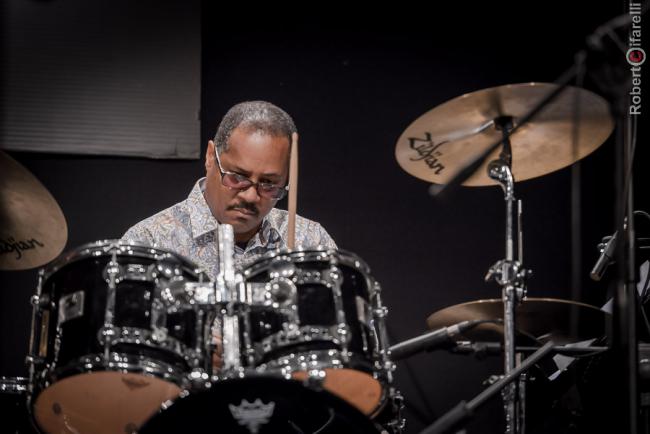
Ray Anderson – Trombone
Ray Anderson is an American jazz trombonist based in New York. He started playing trombone when he was eight, and moved to New York City in 1972. Trained by the Chicago Symphony trombonists, he is regarded as someone who pushes the limits of the instrument, including performing on alto trombone and slide trumpet. He is a colleague of trombonist George E. Lewis. Anderson also plays sousaphone and sings.[2] He was frequently chosen in DownBeat magazine’s Critics Poll as best trombonist throughout the late 1980s and early 1990s. He picked up a wide variety of musical experience, played in the booming loft scene and spent important periods with Barry Altschul’s trio and Anthony Braxtons’ quartet. These bands have included the wild funk unit Slickaphonics and a trio with bassist Mark Helias and drummer Gerry Hemingway called BassDrumBone. Now Anderson can be heard leading his quartet (piano or guitar, upright bass and drums), his Wishbone Ensemble (which adds percussion and violin to the quartet), his Alligatory Band (electric bass and guitar, drums, percussion and trumpet) his Bonified Big Band (classic big band instrumentation) and Ray’s latest incarnation, The Pocket Brass Band featuring Jack Walrath on Trumpet, Bob Stewart on Tuba and Charli Persip on Drums. Ray is also a member of Slideride, a four trombone cooperative featuring Craig Harris, George Lewis and Gary Valente.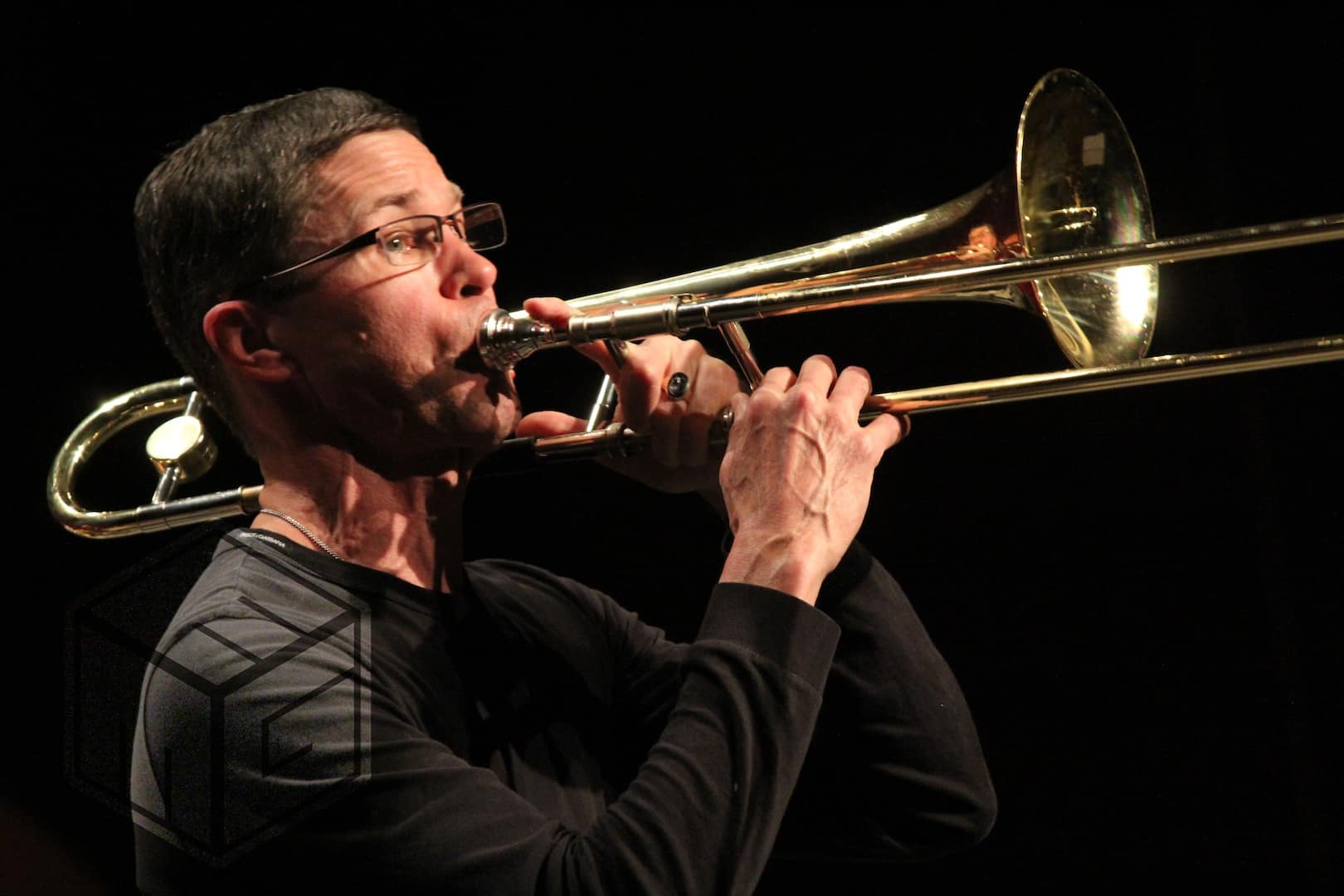
Joe Morris – Bass
Joe Morris is a composer/improviser multi-instrumentalist who plays guitar, double bass, mandolin, banjo, banjouke, electric bass and drums. Morris has performed and/or recorded with many of the most important contemporary artists in improvised music including Braxton, Evan Parker, John Zorn, Ken Vandermark, Tomeka Reid, Fay Victor, Tim Berne, William Parker, Sylvie Courvoisier, Peter Evans, David S. Ware, Joe Maneri, Dewey Redman, Wadada Leo Smith, Leroy Jenkins, Lawrence D. “Butch” Morris, Marshall Allen, Barre Phillips, Barry Guy, Matthew Shipp, Gerald Cleaver, and many others. He has been curating Improvisations Now at Real Art Ways for many years. To learn more about Joe Morris, please visit his website.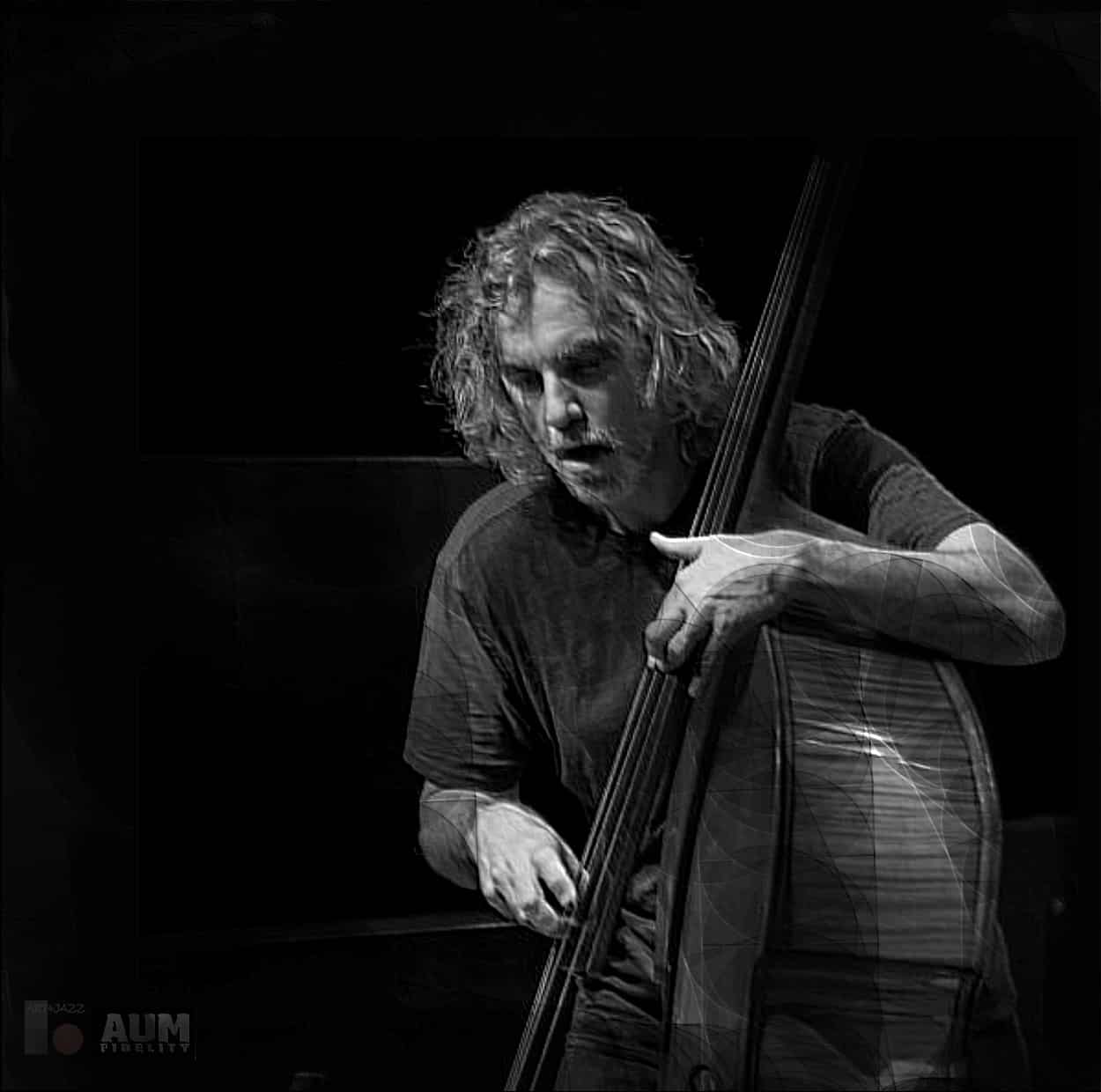
The Series takes place in-person on the second Wednesday of the month. An open mic will precede the featured reader—one poem, one page please. The author’s books will be available to buy for book signing and conversation. Food and drinks will be available to purchase. Free of charge. Ample parking available. 
About Riverwood Poetry Series
The Riverwood Poetry Series, Inc. is a non-profit arts organization committed to the promotion and appreciation of poetry in Connecticut. RPS, Inc. is invested in providing entertaining and thought-provoking programming, while responding to the needs of our neighbors through community outreach and collaboration. From their Facebook page: “The Riverwood Poetry Series has innovated many programs since our inception, all of them free to the public. We provide entertaining and thought-provoking poetry in a relaxed atmosphere.”
Luisa Caycedo-Kimura
Luisa Caycedo-Kimura is a Colombian-born writer, translator, and educator. Her honors include a CT Office of the Arts Emerging Recognition Award, a John K. Walsh Residency Fellowship at the Anderson Center, an Adrienne Reiner Hochstadt Fellowship at Ragdale, and a Robert Pinsky Global Fellowship in Poetry. A three-time Pushcart Prize nominee and Best of the Net nominee, her poems appear or are forthcoming in The Cincinatti Review, Shenandoah, Rattle, Mid-American Review, RHINO, Diode, Tupelo Quarterly, Nashville Review, The Night Heron Barks, On the Seawall, Sunken Garden Poetry 1992-2011, and elsewhere.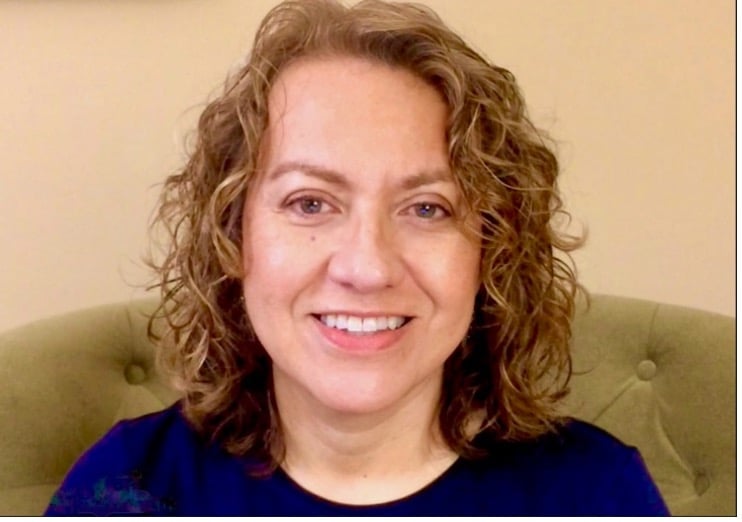
Nadia Sims
Nadia Sims is a Manchester based poet spreading her message of grace across Connecticut, New York, and Massachusetts. The Princeton graduate is the proud author of A Soft Place to Land and We Know The Dark. Her spoken word album, The Weight of Grace, is available everywhere.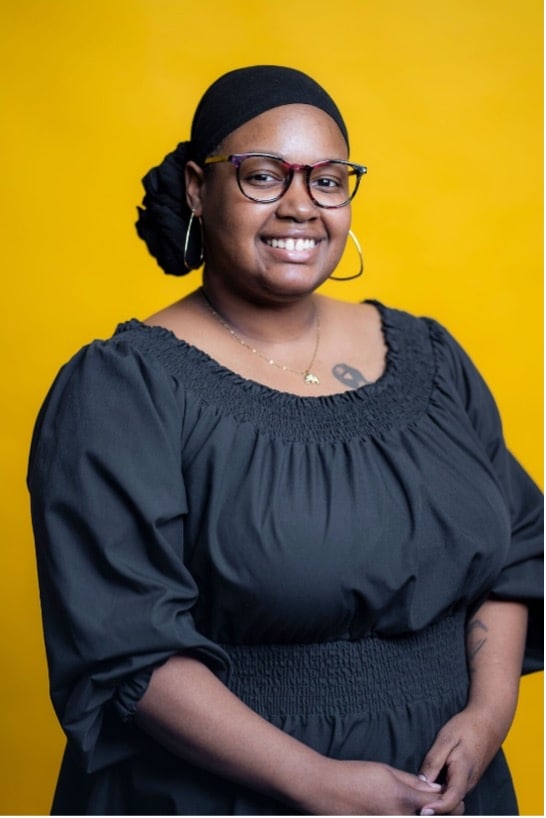
About Riverwood Poetry Series 
The Riverwood Poetry Series, Inc. is a non-profit arts organization committed to the promotion and appreciation of poetry in Connecticut. RPS, Inc. is invested in providing entertaining and thought-provoking programming, while responding to the needs of our neighbors through community outreach and collaboration. From their Facebook page: “The Riverwood Poetry Series has innovated many programs since our inception, all of them free to the public. We provide entertaining and thought-provoking poetry in a relaxed atmosphere.” Every November, Creative Cocktail Hour celebrates another year at Real Art Ways. We invite you to come see old friends and make new ones, while enjoying everything that Real Art Ways has to offer.
Live music, art exhibitions, DJ. Come as you are.
Everybody is welcoming, conversations abound, people connect. Come with friends, come by yourself, hangout. Creative Cocktail Hour is a great way to meet new people!Live Music: Nigel Bello Group & DJ Mr. Realistic
Nigel Bello, a 16 year old junior at East Hartford High School, is a trombonist out of Hartford. Being exposed to the trombone at the age of 6, he has shared the stage with musicians such as Nat Reeves, Gary Bartz, Steve Davis, etc. Nigel has been playing for 10 years and has studied with Steve Davis, Dr. Emmett Goods, and Hommy Ramos just to name a few. He has attended numerous music camps such as Litchfield Jazz Camp, Newport Jazz Camp, and New England Music Camp all with scholarships provided. This July, he is flying to France with the New Jersey Youth Symphony’s Jazz Orchestra as their 2nd chair trombone. His band includes: Nigel Bello: Trombone Alex Pastrana: Piano Matt Dwonszyk: Bass Fernando Garcia: Drums Nelson Bello: Percussion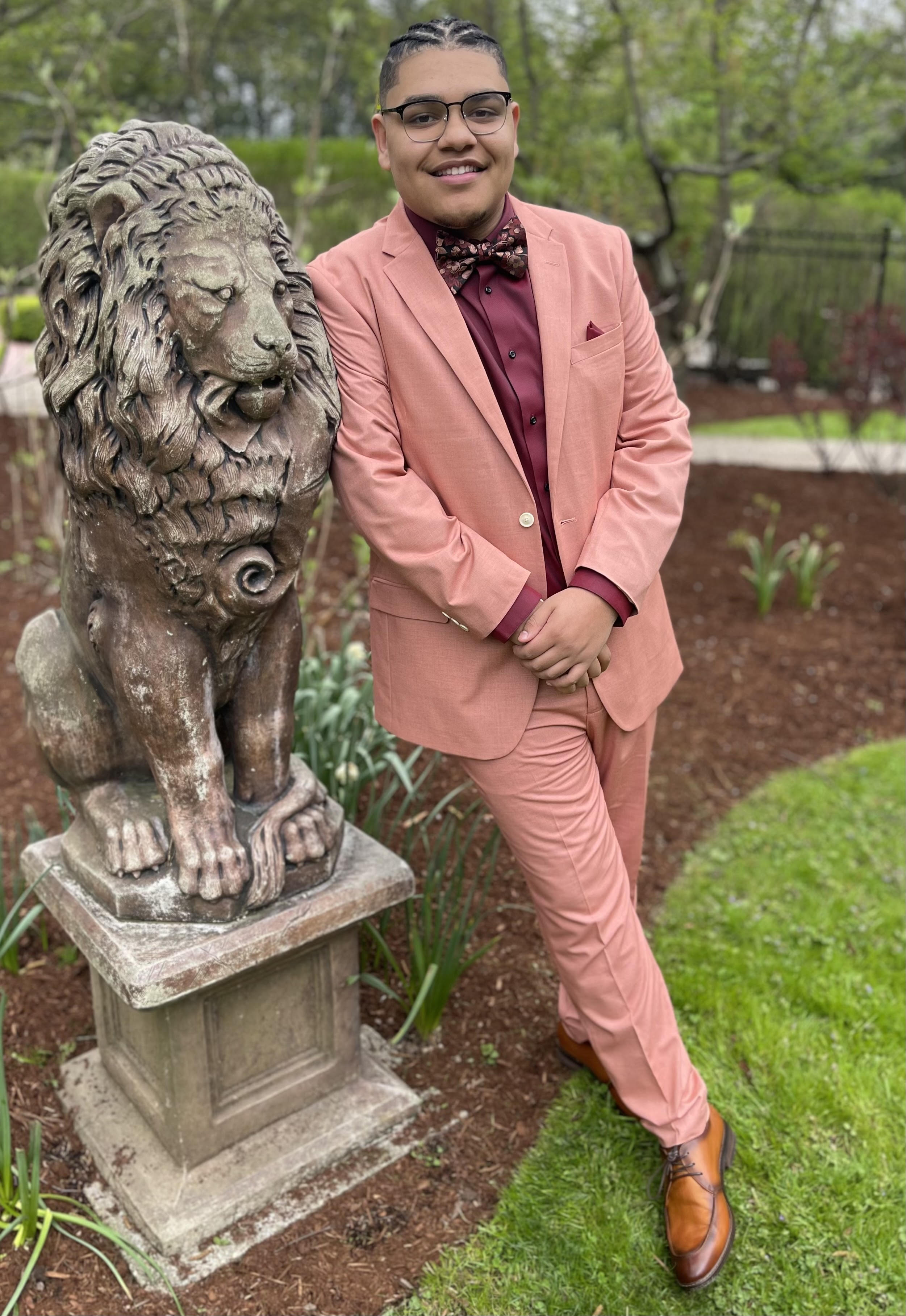
Immersive Art Exhibitions
sub-marine: Jeweler of Memory by Simon Benjamin Ayiti, I Saw It In A Dream by Steven Baboun El Disco Es Cultura by Adrian Martinez Chavez Tubular TimesFood Truck:
Mama Nena, serving fresh, hand made tapas from across Spain.Hands-on art making activities led by RAW staff!
An experience of music imagined and created in real time. This series runs from September 2023-May 2024.
November’s Performance
Ikue Mori – Electronics
Ikue Mori (b. 1953) is an electronic musician expanding the range of sonic and technical possibilities for experimental and improvisational music. She creates rhythmic and ambient soundscapes using digital processing techniques, a laptop computer, and repurposed elements of electronic drumming equipment. She is known for transforming the use of percussion in improvised music and has inspired generations of electronic musicians. She has collaborated with numerous musicians in diverse genres and styles throughout the US, Europe, and Asia, while continuing to produce and record her own compositions. Ikue Mori was recently received a MacArthur Genius Grant in 2022 for transforming the use of percussion in improvisation and expanding the boundaries of machine-based music. For more information, please visit her website.Nate Wooley – Trumpet
Nate Wooley (b.1974) was born in Clatskanie, Oregon and began playing trumpet professionally with his father, a big band saxophonist, at the age of 13. He made his debut as soloist with the New York Philharmonic at the opening series of their 2019 season. Considered one of the leading lights of the American movement to redefine the physical boundaries of the horn, Wooley has been gathering international acclaim for his idiosyncratic trumpet language. Wooley moved to New York in 2001 and has since become one of the most in-demand trumpet players in the burgeoning Brooklyn jazz, improv, noise, and new music scenes. He has performed regularly with John Zorn, Anthony Braxton, Eliane Radigue, Annea Lockwood, Ken Vandermark, Evan Parker, and Yoshi Wada. He has premiered works for trumpet by Christian Wolff, Michael Pisaro, Annea Lockwood, Ash Fure, Wadada Leo Smith, Sarah Hennies and Eva-Maria Houben. Click here for his full bio.Joe Morris – Percussion
Morris was born in New Haven Connecticut in 1955. He began playing guitar at the age of 14 first playing rock music, progressing to blues, then to jazz, free jazz and free improvisation. He released his first record Wraparound (riti) in 1983. He has composed over 200 original pieces of music. Morris has performed and/or recorded with many of the most important contemporary artists in improvised music including, Anthony Braxton, Evan Parker, John Zorn, Ken Vandermark, Mary Halvorson, Tyshawn Sorey, Tomeka Reid, Fay Victor, Tim Berne, William Parker, Sylvie Courvoisier, Agusti Fernandez, Peter Evans, David S. Ware, Joe Maneri, Dewey Redman, Fred Hopkins, Sunny Murray, Wadada Leo Smith, Leroy Jenkins, Lawrence D. “Butch” Morris, Marshall Allen, Barre Phillips, Barry Guy, Matthew Shipp, Gerald Cleaver, and many others. Morris is featured as leader, co-leader, or sideman on more than 200 commercially released recordings on the labels ECM, ESPdisk, Clean Feed, Hat Hut, Aum Fidelity, Avant, OkkaDisk, Not Two, Soul Note, Leo, No Business, Rogue Art, Relative Pitch, Incus, RareNoise, Fundacja Sluchaj, and his own labels Riti and Glacial Erratic. Morris has toured extensively throughout North America and Europe as well as in Brazil, Korea and Japan. He has lectured and conducted workshops on his own music and on improvisation in the US, Canada, and Europe including at Princeton University, Dartmouth College, Harvard University, Bard College, University of Alberta, and University of Guelph. He was the recipient of the 2016 Killam Visiting Scholar Award at University of Calgary. He has been on the faculty at Tufts University, Southern Connecticut State University, Longy School of Music of Bard College, and New School. Since 2000, he has been on the faculty in the Jazz and Contemporary Improvisation Department at New England Conservatory. Morris is the author of the book, Perpetual Frontier: The Properties of Free Music (Riti Publishing 2012). For more information, please visit their website.Simon Benjamin
Please join us on Saturday, January 13th at 3pm for Saturday Soup; a discussion with Simon Benjamin and writer Gervais Marsh about Benjamin’s current exhibition sub–marine: Jeweler of Memory. This event is catered by Fire n’ Spice Vegan Restaurant.
Exhibition Documentation (PDF)
Real Art Ways presents a solo exhibition by 2022 Real Art Award recipient Simon Benjamin.
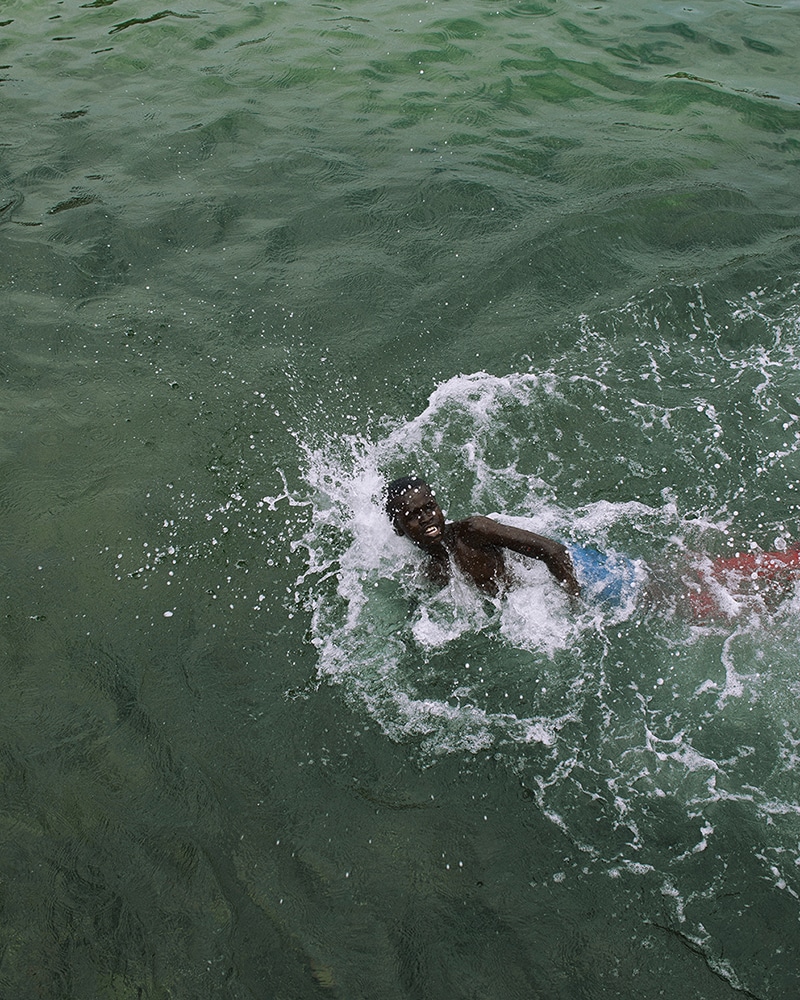
sub–marine: jeweler of memory is an installation that consists of video, photography, and sculpture. The project’s title borrows from Barbadian Poet Kamau Brathwaite’s assertation that “the unity is sub-marine” – resisting the notion of the Caribbean as a fractured region divided by nation-state borders and language. Through the project’s lens, the Caribbean is reframed as expansive, relational, and interconnected over multiple geographies, transgressing colonial divisions.
CLICK HERE to read Gervais Marsh‘s essay on sub–marine: Jeweler of Memory
About the Artist
Simon Benjamin is a Jamaican artist and filmmaker living in New York whose work includes experiential installations, film, photography, and sculpture. Through research, oral history, and critical fabulation, he calls attention to the contradictions entangled in the enduring myths and images of the Caribbean as tropical paradise–a carefully constructed imaginary that replaced the harsh reality of the exploitative plantation. With the intention of moving beyond critique or pointing to systems and power – he creates open-ended poetic and lyrical moving images and objects which bring together the immaterial and the tactile, which he hopes prompts the imagination of futures that exist in the notion of otherwise.
About the Real Art Awards
The Real Art Awards is an annual opportunity for emerging artists living in New England, New Jersey, or New York. The open call, offered with no entry fees to artists, attracts hundreds of applicants each year, of which 6 artists are chosen. Selected artists receive a solo exhibition, with a commissioned essay, professional documentation, and a cash prize of $2,500. The 2022 Real Art Awards was juried by multidisciplinary artist Carlos Motta, curator and creative strategist Yona Backer, and Real Art Ways Executive Director Will K. Wilkins. The 2022 Real Art Awards is supported in part by awards from the National Endowment for the Arts and the Edward C. & Ann T. Roberts Foundation. VIEW ADDITIONAL SELECT PAST EXHIBITIONS
Curated by Terri C. Smith
Photo credit: Possibly in MIchigan, 1983, Cecelia Condit, Courtesy Electronic Arts Intermix (EAI), New York.  Max Almy, “Perfect Leader”, 1983, Courtesy Electronic Arts Intermix (EAI), New York.
Real Art Ways presents a curator talk with Terri C. Smith on her group exhibition;
Tubular Times: Camp, Horror, and Music Television: Video Art 1981-1993
The gallery walk through and talk will begin at 3:30pm on Saturday, December 9 – free admission.
During the talk, Terri C. Smith will give an informal walkthrough and description of the exhibition at 3:30pm for approximately 30 minutes. There will be time for questions with Smith until 5pm.Real Art Ways presents a group exhibition of Video Art curated by Terri C. Smith
Tubular Times is a group exhibition that features significant video art made from 1981-1993. The show also includes thematically related satellite installations with newer works by contemporary artists Am Schmidt and Willie Stewart. The historic component will be on view in the main gallery and black box room and will feature approximately twelve artists, including Peggy Ahwesh, Max Almy, Ericka Beckman, Dara Birnbaum, Cecelia Condit, Cecilia Dougherty, Ulysses Jenkins, Nam June Paik, Ann Magnuson, Pipilotti Rist, Willie Stewart and Michael Smith.
The exhibition is inspired by Vestron video, which was a production company and VHS distributor located in Stamford, Connecticut in the eighties and early nineties. Sharing qualities with Vestron’s catalog of B-horror, music video, and campy humor, many of the works in Tubular Times layer comedy, horror, and music to address 1980s political themes in the U.S., including the AIDS crisis, a growing wealth gap, and Reagan-era backlash to the civil liberties of the 1960s and 1970s. The show’s title references: cathode-ray tube (CRT) televisions used in the 1980s; that decade’s saying “totally tubular”; and phonetically suggests the word turbulent.
1981 was the first year of MTV and the first year of the AIDS epidemic, setting much of the tone for a decade. It’s not surprising, then, that the video art of the 1980s exhibited a unique mix of urgency, desperation, camp, and techno celebration. In the video art of that era, gender identity, a sense of life-and-death urgency, theatricality, satire, and experimental digital techniques coalesced. During this time, we see irreverent divergences from the conceptual video art of the 1970s which, while often addressing socio-political themes, was rarely directly influenced by television and movies. With cable television growing in the mid-1970s and being in sixty-percent of American houses by 1992 and with VHS bringing movies into the home, the topographies of entertainment shifted dramatically during this time. Video editing also became more sophisticated, allowing artists to appropriate imagery from pop culture.
Vestron’s catalog was a mix of comedy, satirical spoofs, and thriller/horror genres. The company also was involved in music videos and released Making of Michael Jackson’s Thriller. Vestron is best known for the film Dirty Dancing, but other movies they released include: quirky comedies like Earth Girls are Easy and The Princess Bride; horror movies such as Slaughter High and Horror Hill; and comedy-horror films such as Sundown: the Vampire Retreat and Lair of the White Worm. For some of the artists in Tubular Times, horror—a genre inextricably linked to VHS—becomes an allegory for the othering of the LGBTQ+ community as well as the systemic failure and loss of life during the AIDS crisis, which was further exacerbated by Reagan-era policies that centered cisgender, heteronormative, white, capitalist ideals. The resulting ethos of these videos is to varying degrees harrowing and hysterically funny.
Due to conflicting events, this exhibit will be closed on the following dates:
December 2nd, 2023
December 3rd, 2023
December 10th, 2023
January 7th, 2024
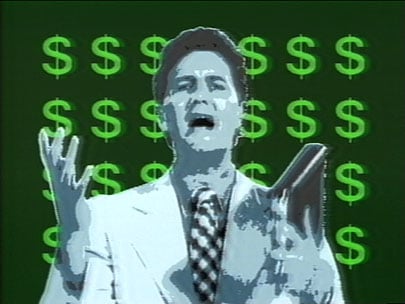 Max Almy, “Perfect Leader”, 1983, Courtesy Electronic Arts Intermix (EAI), New York.
About the Curator
Terri C. Smith is a curator with more than twenty-five years of experience at accredited museums and small, nonprofit art spaces, curating approximately eighty contemporary exhibitions and receiving three, multi-year grants from The Andy Warhol Foundation for the Visual Arts, among other awards. She received national recognition for her work as the founding creative director of Franklin Street Works, an award-winning, critically recognized nonprofit art space that built community in and brought internationally exhibiting artists to Stamford, Connecticut from 2011 to 2020. Her practice often focuses on intersections of conceptual art and social justice themes as well as experimental art practices. Smith’s exhibitions have received positive reviews in artcritical, Art Papers, Artforum, The Brooklyn Rail, Modern Painters, among others.
Live music, art exhibitions, DJ, food trucks, and more. Come as you are.
Everybody is welcoming, conversations abound, people connect. Come with friends, come by yourself, hangout. Creative Cocktail Hour is a great way to meet new people!Music:
Keila Myles & The Moose Knuckles
Keila Myles is a multidisciplinary artist based in Hartford, CT. She is best known for her work and performance as a musician. Her freshman project titled Just Add Water best sums up her ability to shape shift and aqueous to any genre and art form. Her style is a blend of R&B, soul, boom bap, classic rock and reggae. Keila draws from her American heritage in her lyricism and song-writing yet her delivery is reminiscent of classic reggae music. She will be performing with her band, The Moose Knuckles.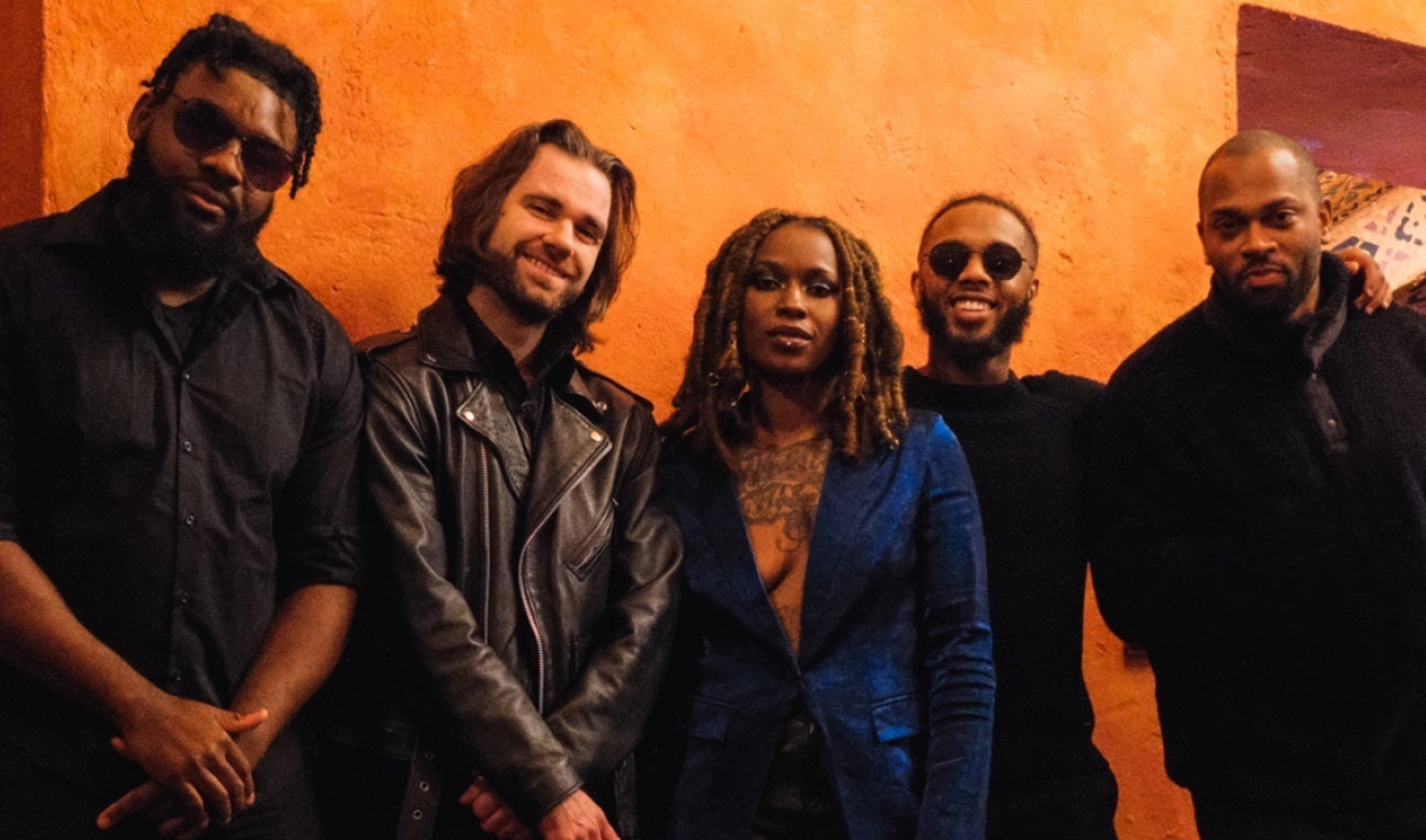
DJ Kasey Cortez:
Kasey Cortez is a multidisciplinary artist currently working to merge her many realms of creative expression. She has delved into worlds of music, theatre, photography, design, fashion, & installation art. Her work across mediums is inspired by a deep fascination with collective trends/culture, the minutiae of human choice & the mundane passing of time. She’s also a yoga teacher of nearly 10 years, & DJing has become her new favorite form of expression!