
Painting, Photography, Sculpture, Video, Film,
New Media, Performance and Literature of Poland
and the Polish Diaspora
Overview
POZA
“Taking as a point of departure
specific national and cultural distinctions, which could be called “Polishness” by
its choice of artists, the show will offer an open-ended proposition
that treats such distinctions as matters of choice and awareness, rather
than linking them to a specific geography or a place of birth; the
art will be interpreted as an expression of enhanced evanescence in
a politicized environment that encourages both nationalism and globalism.
While such artists as Jacek Malinowski will address
the current situation in Poland (more exactly its psychological consequences
on the Poles
born after the collapse of Communism in Eastern Europe and Russia),
others (Azorro for instance) will deal with a condition of the artist
in a free market economy. Kinga Araya, an artist who lives in Canada,
will focus on the complex condition of an immigrant, while Krzysztof
Wodiczko will examine the persisting abuse of Polish women by Polish
men. Karolina Bregula will give visibility to another “silent” presence
in the Polish society, that of its sexual minorities.
Attention
will also be paid to the way the artists in the show participate
in the larger world, exploring its diversity in a conscious and sensitive
manner while doing it from both Polish and international perspectives
(Gabriela Morawetz, Monika Weiss, and Pawel Wojtasik). Finally,
several works (by Frida Baranek, Anna Bella Geiger, and Ursula von
Rydingsvard) will deal with issues of memory as a departure point for
both questioning current reality and maintaining its continuity.”
Curated by the Polish-born and New York based art critic
and art historian Marek Bartelik, POZA will gather together works of
31 artists with roots directly or indirectly in Poland, and who currently
live in Poland, the United States, Canada, France, and Brazil. The artists
represent different generations — the oldest born in the 1930s,
the youngest in the early 1980s. The works are divided between the main
gallery, three accompanying exhibitions in the Real Room, and accompanying
film programming.
Marek Bartelik was born in Olsztyn, Poland,
lived in Paris, France, between 1981 and 1986, and presently resides
in New York City, where he teaches modern and contemporary art at The
Cooper Union for the Advancement of Science and Art. He has taught art
theory at, among others, Yale and MIT.
He holds an MS degree in Civil Engineering from Columbia University and
a PhD in Art History from the Graduate Center of the City University of
New York. His articles have appeared in numerous European and American
publications, such as CAA Art Journal, Art in America, Bookforum, Print,
Art and Antiques, Gazeta Wyborcza, Zycie Warszawy and Obieg. Since 1992,
he has been writing reviews for Artforum, covering art scenes in, among
others, the U.S., China, Brazil, Peru, Venezuela, Egypt, France, Germany,
Greece, England, Spain, Turkey, Czechoslovakia, and Poland. He has lectured
nationally and internationally at the Boston Museum, Boston MA; the Hirshhorn
Museum,Washington D.C., Museo Nacional de Bellas Artes, Buenos Aires, Agrentina;
the Pinacoteca in Sao Paulo, Brazil; the Henry Moore Foundation, Leeds,
England; and the Academy of Sciences in Warsaw, Poland. He has curated “Adja
Yunkers: Retrospective” Bayly Art Museum, Charlottesville, VA, March
2000, traveling to the University of Georgia Art Gallery (late fall 2001)
and the Block Gallery at Northwestern University in Chicago (spring 2002); “Sequences
AS YOU CAN SEE: Russian Conceptualism” The Jane Voorhees Zimmerli
Art Museum, Rutgers, the State University of New Jersey, New Brunswick,
NJ, March 1997; and “Polish Prints from the Eighties,” Parsons
School of Design, New York, NY, November 1991. He is a Vice-President of
AICA-USA (International Organization of Art Critics-US Section).
His books include: Early Polish Modern Art: Unity in Multiplicity (Manchester,
UK: Manchester University Press, 2005); To Invent a Garden: The Life and
Art of Adja Yunkers (New York: Hudson Hills Press, 2000); and The Sculpture
of Ursula von Rydingsvard (New York: Hudson Hills Press, 1996), co-authored
with Dore Ashton and Matti Megged.
His first volume of poetry, East Sixth Street, will be published by Viveiros
de Castro Editora Ltd. in Rio de Janeiro, Brazil, in December 2006.
Sunday, October 29 • 7pm PANEL DISCUSSION: "From Poland with Love"
Wednesday, November 1 • sunrise - sunset
Monika Weiss performs "Horos," site-specific ephemeral installation & performance
at Manchester Community College
Sunday, November 5 • 3pm
PANEL DISCUSSION: "Poland Abroad"
Thursday, January 4 • 6-9pm
Writers & Readers: POZA
Sunday, January 28 • 3pm
CLOSING CEREMONY
POETRY READING: Marek Bartelik "Curator as Poet"
Curated by John Morrison and Marek Bartelik
Each film begins at 3pm, followed by a discussion.
Sunday, October 29 I Am (Jestem, 2005)
A poignant and poetic story of a boy who escapes from an orphanage after having been left there by his mother. He establishes a brief, intense relationship with a young girl who lives across the street from where he has hidden himself in an abandoned boat. By internationally acclaimed director Dorota Kedzierzawska.
Sunday, November 12
Camera Buff (Amator, 1979)
Kieslowski broke onto the international scene with this sweet political film about a factory worker who buys a home movie camera to take pictures of his family and ends up doing documentaries of his fellow workers---NOT a good idea in Communist Poland. The wonderful Jerzy Stuhr plays the “camera buff” with a mixture of naivete and blossoming social consciousness.
Sunday, November 19
The Short Films of KRZYSZTOF KIESLOWSKI – Part I
Before he was an international sensation with his Decalogue and the Tricolor films Red, White and Blue, Polish director Kieslowski was an acclaimed documentary filmmaker. This exquisite program of his shorts is traveling the country by the auspices of the Polish Cultural Institute and Lincoln Center Film Society. Organized by Richard Pena and the Film Society of Lincoln Center, the Polish Cultural Institute in New York, the Polish National Film Archive, Documentary and Feature Film Studio in Warsaw, Polish Television (Aleksandra Biernacka), and the Lodz Film School.
I Was a Soldier / Bylem zolnierzem
1970, Documentary 35 mm, black & white, 16 min Director: Krzysztof Kieslowski Screenplay: Krzysztof Kieslowski, Ryszard Zgorecki Cinematography: Stanislaw Niedbalski Production Company: “Czolowka” Film Studio, Warsaw, Poland
" I made one quite nice film there [in Czolowka],
a documentary, but not commissioned. It was called "I Was a Soldier".
It spoke of soldiers who had lost their sight in the Second World War. (...)
I asked
them what they dreamt about at night, and that was the subject of this film." (Krzysztof
Kieslowski). One suspects the directors’ sense of irony was gratified
by the awards given to the film that concludes with an anti-war message: Awards:
1971Krakow (Polish Festival of Short Films) -"Golden Kord", an award of the weekly Polish Soldier „for a film showing the patriotic, progressive content of the military fight for national and social liberation."
1971Award of the Ministry of National Defense
First Love / Pierwsza milosc
1974, TV documentary 16 mm, color, 52 min 20 sec Director: Krzysztof Kieslowski Cinematography: Jacek Petrycki Production Company: WFD (Documentary Film Studio), Warsaw Sponsored by:Polish Television
A deeply humanist and loving document of a naïve young couple coping
with the social challenges to their unplanned pregnancy. The camera follows
a real girl and boy, still in school at 17 and 18, as they first consider
and then reject the option of an abortion with potential complications,
and then have to deal with attitudes at home and at school, and the ever-mounting
bureaucratic hurdles to marriage, lodging, and income. Graduating from
[film] school I wrote a work entitled “Reality
and Documentary Film”.
I defended the thesis that it is possible to imagine the life of any man as
a story. Why think up plots when they exist in life? One only needs to photograph
them. Out of several ideas I only managed to realize one: “First Love”.
I actually think it’s
not a bad film.” (Krzysztof Kieslowski) Awards:
1974 Krakow (Polish Festival of Short Films) - Grand Prix "Golden Lajkonik”
1974 Krakow (International Festival of Short Films) – Special Award of the President of the Radio and Television Committee - "Golden Dragon"
Underground Passage / Przejscie podziemne
1973, premiere: 1974 TV short drama 35 mm, black & white, 30 min Director: Krzysztof Kieslowski Screenplay: Ireneusz Iredynski, Krzysztof Kieslowski Cinematography: Slawomir Idziak Production Company: „Tor” Film Studio, Warsaw;
Polish Television Cast: Teresa Budzisz-Krzyzanowska (Lena), Andrzej Seweryn (Michal), Anna Jaraczowna, Zygmunt Maciejewski, Jan Orsza-Lukaszewicz, Janusz Skalski, Wojciech Wiszniewski
Despite its documentary look, this short TV drama dealing with a crisis
of values is in fact one of Kieslowski’s earliest narrative films.
A woman has left her husband and her teaching job in a small town and
now works in Warsaw as a window dresser in a pedestrian underpass. Her
husband finds her and tries to re-tie the thread that once linked them.
But the chasm between them is underscored by the constant interruptions
of their conversation. Kieslowski’s documentary experience is apparent
in his approach to hand-held camerawork, editing, and narration.
Sunday, November 26 The Short Films of KRZYSZTOF KIESLOWSKI– Part II
Railway Station / Dworzec
1980, Documentary 35 mm, black & white, 13 min Director: Krzysztof Kieslowski Współpraca realizatorska: Krzysztof Wierzbicki Cinematography: Witold Stok Music: Michal Zarnecki Production Company: WFD (Documentary Film Studio), Warsaw, Poland
“Railway Station” is widely considered one of Kieslowski’s
finest documentaries. “The contrast between the real and the propaganda
image of Warsaw’s main railroad station, a flagship investment of the
Gierek decade: ‘Central Station’. […]
We spent about ten nights at this railway station trying to photograph "lost" people.
The metaphor of voyeurism was an idea that I think only came to mind later
on. Among other things, we were trying to observe with a hidden camera the
funny reactions of people - not completely hidden, as we only covered it a
little with our backs or put it far away and used a long lens – […]
but we managed to shoot a few funny portraits." (Krzysztof Kieslowski)
From a Night Porter's Point of View / Z punktu widzenia nocnego portiera
1977, Documentary 35 mm, color, 16 min 5 sec Director: Krzysztof Kieslowski Cinematography: Witold Stok Music: Wojciech Kilar (music from the film „The Quarterly Balance” by Krzysztof Zanussi) Musical arrangement: Michal Zarnecki Production Company: WFD (Documentary Film Studio), Warsaw, Poland Featuring: Marian Osuch
Portrait of a factory porter, a fanatic of strict discipline, a man
of almost fascist views, whoextends his power even into his personal
life as he tries to totally control everybody and everything in the belief
that rules are more important than people... “The porter saw
this film and he liked it. Later my film won at the festival in Krakow,
and later it was shown as a short at “Confrontations” [yearly
show of ten best international productions, only held at select, ambitious
theaters]. (Krzysztof Kieslowski) Awards:
1979 Krakow (Polish Festival of Short Films) - Grand Prix "Golden Lajkonik"
1979 Krakow (International Festival of Short Films) – Award of International Federation of Film Press FIPRESCI for the "particularly ethical values and social tendencies of the film, as well as for interesting artistic solutions"
1979 Lille (International Short & Documentary Film Festival) - Jury Award
1979 Lyon (International Documentary Film Festival) - "Silver Sesterce"
The Office / Urzad
1966, Documentary (School Etude) 35 mm, black & white, 5 min 5 sec Director: Krzysztof Kieslowski Screenplay: Krzysztof Kieslowski Cinematography: Lechoslaw Trzesowski Production Company: Lodz Film School, Poland
A very interesting attempt to go beyond imposed filmic and social schemas. Shot with a hidden camera at the counter of the (state-owned) Social Security office, this satire on bureaucracy and clerical soullessness is right on target. A queue forms in front of the counter window and the clerk repeats the question: “What have you done in your lifetime?” Image and original sound have an equal dramaturgical function.
Bricklayer / Murarz
1973, released 1981, Documentary 35 mm, color, 18 min Director: Krzysztof Kieslowski Cinematography: Witold Stok Production Company: WFD (Documentary Film Studio), Warsaw, Poland Featuring: Józef Malesa, bricklayer
Documentary about a bricklayer who, during the Stalinist era in the mid 1950s, was encouraged by the Party to further the Communist cause by becoming an exemplary worker (Stakhanovite). In flashbacks from scenes of his participation in a 1970s May Day parade, he recalls how, as a young activist, he was promoted to an office job. “I became a jack-in-the-office, instead of an activist... I got a desk job and gasped for breath, I had to let in fresh air through the window... And then came the year 1956, and everything tumbled down all of a sudden. It was a little painful. The question was: What now? And in 1956 I asked them to relieve me and send me back to my job in production. I returned to where I had come from.” An idealistic youth, exploited by ruthless ideology - in a film of subtle political nuances.
Factory / Fabryka
1970, Documentary (Reportage) 35 mm, black & white, 18 min Director: Krzysztof Kieslowski Assistant Director: Marcel Lozinski Cinematography: Stanislaw Niedbalski, Jacek Tworek Production Company: WFD (Documentary Film Studio), Warsaw, Poland
A working day in the Ursus tractor factory. Shots of workers are contrasted with those of a management board meeting. The factory cannot meet its production quota because there is a shortage of equipment, parts, and so on. Papers are sent out, licenses are applied for, numerous meetings held, but there seems to be no way out of the vicious circle of misunderstandings and bureaucracy - the left hand doesn't know what the right is doing. As one of the board members says: “the bureaucracy in this country hampers any solution.” Yet the workers still have to meet their quota. A bitter image of the functioning of an industrial enterprise within a socialist economy, such criticism was daring while the film was being made in 1970, but following the bloody suppression of strikes in Gdansk that December, it became officially praiseworthy during the temporary political thaw that followed: Award: 1971 Krakow (Polish Festival of Short Films) – "Iron Boat" Award of Glos Robotniczy [Workers’ Voice] for the film most engaged in contemporary social issues.
Hospital / Szpital
1977, Documentary (Reportage) 35 mm, black & white, 21 min Director: Krzysztof Kieslowski Cinematography: Jacek Petrycki Production Company: WFD (Documentary Film Studio), Warsaw, Poland
The camera follows orthopedic surgeons on a 32-hour shift. Instruments
fall apart in their hands, the electrical current keeps breaking, there
are shortages of the most basic materials, but the doctors persevere
hour after hour. Kieslowski is as much impressed by the dedication, stamina,
compassion, and humor of the surgeons as he is by the crumbling environment
of 1970s
Poland within which they have to work
(Krzysztof Kieslowski) Awards:
1977 “Warsaw Mermaid” (Award of the SDP Film Critics Club) given at the Polish Festival of Short Films in Krakow
1977 Krakow (International Festival of Short Films) - Grand Prix "Golden Dragon"
Seven Women of Different Ages / Siedem kobiet w roznym wieku
1978, Documentary 35 mm, black & white, 15 min Director: Krzysztof Kieslowski Assistant Director: Krzysztof Wierzbicki Cinematography: Witold Stok Production Company: WFD (Documentary Film Studio), Warsaw, Poland
Subtle portraits of seven women: episodes in which each day of the week shows a ballerina of classical dance at work or in rehearsal; but the ages of the dancers vary from the smallest child taking her first steps in ballet to the eldest ballerina who is now a ballet teacher. Award: 1979 Krakow (Polish Festival of Short Films) – Golden Lajkonik
Sunday, December 3
The Big Animal
Written by Polish Master Krzysztof Kieslowski
When the circus leaves town, Zygmunt Sawicki and his wife Marysia unwittingly adopt a new member into their family. Their quiet life is disrupted when an abandoned camel stops at their front gate. Sawicki quickly forms a close bond with the nameless camel. At first, the townspeople, too, are enthralled with the giant animal, since it is a welcome distraction from their everyday routine. Though they march through the streets cheering for the animal, Sawicki seems wary. The presence of the camel has the power to change not only the family who has adopted it, but the cautious denizens of the town and countryside.
(Poland 2000. 72 Minutes)
(USE THIS LINK FOR PIC http://www.realartways.org/enews/animal.jpg)
Sunday, December 10
Crows
Another rare masterpiece from Dorota Kedzierzawska. A neglected 10-year-old girl named “crow” for her imitations of the bird, sees an infant being pampered by its parents and decides to steal the child and give it the attention she has never gotten. Her day with the baby opens up her own emotions and she goes back to her parents open hearted.
(Wrony, 2004)
Sunday, January 07
My Nikifor
Actress Krystyna Feldman triumphs in a transgender performance playing nationally famous curmudgeonly Polish naïve artist Nikifor. Taking place in mid 20th century Communist Poland, it chronicles the artist’s habit of invading other people’s studios and homes for his own use and his relationship to a state-employed painter and his family.
(Mój Nikifor, 2004)
Sunday, January 14
Monika Weiss: Horos
Monika Weiss will present a video based on her Manchester Community College performance "Horos," and will talk about her work.
Sunday, January 21
The Revenge (Zemsta, 2002)
A wonderfully wacky 18th century comedy directed by the legendary Andrzej Wajda and starring legendary expatriate Polish director Roman Polanski, who plays an over-the-top comic character feuding with another resident of a rapidly crumbling castle.
Saturday, January 27 Carpatia (Carpatia – Geschichten aus der Mitte Europas, 2005)
A stunning film about the terrible beauty of the Carpathians, an area at the meeting points of Romania, Slovakia, Hungary, Poland and the Ukraine. Made by two German filmmakers of Polish descent, Adrzej Klamt and Ulrich Rydzewski, it focuses on the small villages, musicians, magicians, rabbis, and cowboys.
Funders
POZA was made possible by the National Endowment
for the Arts, Charles Nelson Robinson Fund, Trust for Mutual Understanding,
the J. Walton Bissell Foundation, the Polish Cultural Institute, and
Bank of America.
Special thanks to our Audio Video equipment sponsor for
POZA
Major support for programs at Real Art Ways comes from Real
Art Ways Members, Greater Hartford Arts Council, Hartford Foundation
for Public Giving, Connecticut Commission on Culture and Tourism, The
Wallace Foundation, The J. Walton Bissell Foundation,
Ensworth Charitable Trust, Howard & Sandy Fromson, Majorie Morrissey,
and the Andy Warhol Foundation for the Visual Arts.
Real Art Ways • 56 Arbor St • Hartford CT 06106 • 860.232.1006 • email
us • directions
Curatorial Statement
Curatorial Statement: POZA Marek Bartelik
POZA begins with a statement by the Polish writer Witold Gombrowicz
(1904-1969), who spent most of his adult life in exile (in Argentina,
Germany, and France): “I know very well what kind of Polish culture I wish
to have in the futureŠ the weakness of the contemporary Pole resides in his
oneness (in Polish, his “jednoznacznosc”) and also‹his onesideness;
therefore all effort should be made to enrich him with the second
polarity‹to complement him with another Pole, who is
completely‹extremely‹different.” (Dzienniki, 1954)
POZA also originates in Hartford, Connecticut, in a twofold way: at Real Art
Ways, one of the country’s leading multi-disciplinary alternative spaces
devoted to arts that do not easily fit into established notions of they are
supposed to be, and in Hartford at large, a region with a significant Polish
community made of generations of old immigrants and recent newcomers, who constitute its very fabric: Poles together with Puerto Ricans, Brazilians,
Jamaicans, Vietnamese, Portuguese and more. In many ways, Hartford is a
typical American city, belonging to everyone and no one‹to our own “unstable
Americaness,” and as such is a perfect ground for POZA. The Pole in the
exhibition is an everyman in the contemporary world, both standing apart and
belonging to it.
In search of artists for this show, I have ventured in different places,
both in the US and abroad: New York, New Haven, Warsaw, Poznan, Krakow, Paris, Montreal, Mexico City, and Rio de Janeiro, looking for Polish artists with “unstable” biographies, the nomads of nowadays, who have left their places of birth, and moved sometimes outward, to another country, sometimes just inward, inside their studios. The issue of displacement and journeying (real and imaginary), so important to our current world, has a deep cultural signification. In POZA it is interpreted as a state of becoming (or rather a state of being) and a state of alertness to the issues relevant to the current world.
The Polish word “poza” has a double meaning: “posturing” or “posing” (as one disguises his or her true nature for public display) and “beyond” or
“trans.” Taking as a point of departure specific national and cultural
distinctions, which could be called “Polishness” by its choice of artists,
the show offers an open-ended proposition that treats such distinctions as
matters of choice and awareness, rather than linking them to a specific
locality or a place of birth; the art will be interpreted as an expression
of enhanced evanescence in a politicized environment that encourages both
nationalism and globalism. While such artists as Jacek Malinowski will
address the current situation in Poland (more exactly its psychological
consequences on the Poles born after the collapse of Communism in Eastern
Europe and Russia), others (Azorro group for instance) will deal with a
condition of the artist in a free market economy. Kinga Araya, an artist who
lives in Canada, will focus on the complex condition of an immigrant, while
Krzysztof Wodiczko will examine the persisting abuse of Polish women by
Polish men, which often passes unreported. Karolina Bregula will give
visibility to another “silent” presence in the Polish society, that of its
sexual minorities. Attention will also be paid to the way the artists in
the show participate in the larger world, exploring its diversity in a
conscious and sensitive manner while doing it from both Polish and
international perspectives (Gabriela Morawetz, Monika Weiss, and Pawel
Wojtasik). Finally, several works (by Frida Baranek, Anna Bella Geiger,
Jerzy Kubina, and Ursula von Rydingsvard) will deal with issues of memory as
a departure point for both questioning current reality and maintaining its
perceived continuity.
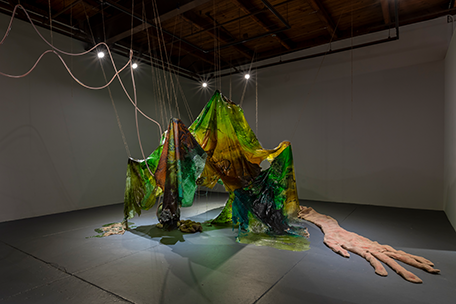
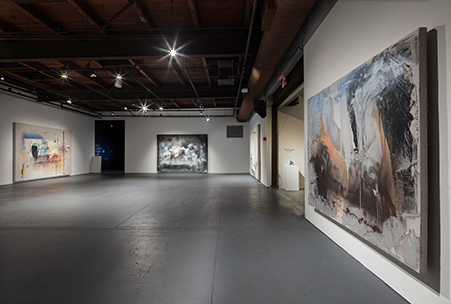
The exhibition, which consists of a large show in the main gallery and three
smaller shows in the Real Room, will include a range of artistic medias:
painting, sculpture, photography, video art, new media, as well as
performance, billboards and art presented via the Internet. To add to the
“poza” aspect of the show, it will be expanded beyond the white cube setting
to several other venues outside of Real Art Ways: the streets of Hartford,
Manchester Community College, and the world wide web. Framed by a specific idea about contemporary artists’ relational identity, this exhibition
focuses on artworks themselves, rather than treating it as “illustrations”
for that idea. The artists are presented as individuals with strong artistic
personalities rather than a coherent community, and as such establish a
multi-directional dialogue with each other.
The forthcoming catalogue will further address the issue of “unstable
identities,” putting it in the context of artists’ biographies. How memory
is being preserved is an old question that is being asked in our days with
new urgency. Rather than treating art as material for creating linear
history, the works of 31 artists in POZA will be approached as a vehicle for
constructing a more circular model of long-time remembrance. They will be
examined as mnemonic devices with a dynamic functionality related to
artists’ lives. To make that connection more explicit, the catalogue will
contain interviews with the participants in POZA about their lives and their
impact on artistic practices. The conversational aspect of those interviews
should correspond to the conversational aspect of POZA.
For more information, please contact Marek Bartelik at marekb1@mac.com