exhibitions |


Shadow Show
Olu Oguibe: Buggy: Memorial to the Unknown Child, 1997

Shadow Show
Jennifer Perry: Untitled, 2005

Shadow Show
Elizabeth Keithline, The Lost House Project, 2005, steel & wire

Shadow Show
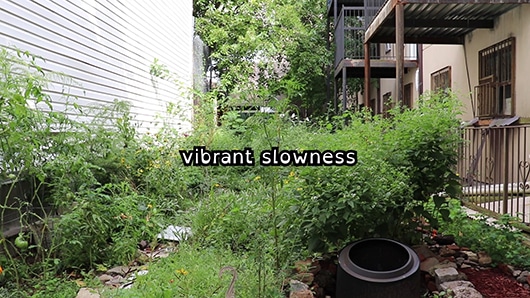
William Lamson, Yard, 2004
animated video, TRT 1:12 minutes

Shadow Show

"Poetry is the art of substantiating shadows, and of lending existence to nothing.” -Edmund Burke

Shadow Show includes work by 16 artists, many from Providence, Rhode Island, and others from Connecticut and New York. The exhibition will explore a range of associations with the word and idea of "shadow." Included will be work in which physical shadows either play an integral part, or the ideas of shadow, as in tail, trace, surveillance, mystery, memory and longing, are explored. The exhibition will work on multiple levels, addressing visual mystery, but also hidden systems in society.

Co-curated by Rhode Island artist Elizabeth Keithline, who originated the idea, and Real Art Ways' Director of Visual Arts, Kristina Newman-Scott, Shadow Show includes painting, sculpture, video, new media, installation, and performance art.

Keithline conceived of Shadow Show after noticing a trend among her colleagues of engaging the notion of traces, things that are left behind, and things that are half-hidden. Keithline's mesh sculptures are the remnants of combustible items wrapped in wire and then set ablaze. Jennifer Perry, makes “drawings” by weaving the hair of friends and family into paper, leaving behind a trace of the artist's world in the art object itself. Sam Ekwurtzel compiles images of televisions from ebay, wherein the seller's reflection and that of their living room is faintly visible on the photographed screen. Olu Oguibe's Buggy: Memorial to Unknown Child explores memory, death, longing and justice through the lens of personal experience. Artist Duncan Laurie and electrical engineer Gordon Salisbury capture and amplify sound signals found naturally in plants and minerals, giving viewers access to otherwise hidden energies.

Participating artists include William Allen, Bert Crenca, Tim Doherty, Samuel Ekwurtzel, Erik Gould, Richard Goulis, Mary Paula Hunter, Elizabeth Keithline, Duncan Laurie, William Lamson, Robin Mandel, Rupert Nesbitt, Jennifer Perry, Olu Oguibe, Gordon Salisbury and Barbara Westermann.

Read the Curator's Statement

Curator's Statement

“Poetry is the art of substantiating shadows and of lending existence to nothing” – Edmund Burke

I can remember when I was a young teenager, that moment of pure, ridiculous oblivion, when, oops, I kissed my best friend’s boyfriend. My memory of that moment is not of any rapture, rather my memory is of the searing, aching guilt that followed it, a memory that has stayed with me from then ‘til now like a shadow.

One of many definitions of “Shadow” in the Merriam-Webster Dictionary is, “A dominating presence or influence.” This was what came to my mind when Elizabeth Keithline approached me with her idea for Shadow Show, a group exhibition. I thought of how life’s defining moments, like certain pieces of art, can be totally obscure and unnoticed if not seen in the right light. The extended truths or shadows so to speak can finally be revealed as most poignant by giving them that light. With this in mind I began thinking about which artists’ works would clearly present their alternate meanings in our space. The “Shadow” in our title had now become a metaphor for the obscure alternate design.

Keithline’s installation, The Lost House Project, consists of hanging steel mesh sculptures, the remnants of wire encapsulated objects that have been burnt. This is a technique the artist developed called the “Lost Box.” The installation has a feeling of mystery and absence and the work is lit so as to cast shadows on surrounding walls. Under the umbrella of our metaphor, Keithline’s installation might appear most literal but upon further investigation, walking in to the room reveals a dynamic experience with scale, perspective and movement. This was ultimately embodied by Mary Paula Hunter’s interpretive dance performance on opening night. Hunter’s fractured and disjointed dance around the objects in Keithline’s installation (reverberated by their shadows) made the objects animate, giving them temporary life. Her expressionistic and rhythmical performance was the ultimate translation of Keithline’s lost house concept in movement.

Tim Doherty’s I am an impotent necromancer. I know this, but I will keep trying. explores the idea of reciprocation and the life/death cycle. A cold steel machine with working gears and levers stands atop a platform with three taxidermied birds sewn to three steel poles. His work, similar to Keithline’s, escapes a literal affinity to the show’s title. By climbing the steps of the platform and turning the cog, the participatory viewer becomes a part of the piece in two ways: in one way, he is simply mechanical giving the machine movement, but the extended truth of the piece is revealed to viewers watching this interaction: his shadow becomes godlike, temporarily giving life to the taxidermic creatures.

On the other hand, Olu Oguibe’s Buggy: Memorial to the Unknown Child skips the literal but wholly embraces the metaphor in our Shadow Show concept. One might think of an altar-piece when approaching Oguibe’s mixed media installation. An empty vintage toy carriage stands on a pedestal in front of a stage-like curtained frame. Within the frame is a large black and white photographic image of a young child. Oguibe’s piece explores memory, death, longing and injustice through the lens of the artist’s own personal shadows.

Taking another approach, Barbara Westermann’s Airport Lounge Cairo investigates global societal shadows or as my co-curator puts it, “hidden systems” that surround us. Airport Lounge Cairo is a conceptual installation representing an airport lounge where viewers are invited to sit on two cushioned seats. White poles with round speaker heads (almost as if they are PVC sunflowers jutting out of the ground) hint at rectangular shape and play a collage of orchestrated sounds. Sitting in this space might make one think about the universality of the airport lounge experience. The noise and activity surrounding the viewer might seem at once very familiar, and yet foreign. This piece explores the 21st century emigrant, CEO, vacationing dad, steward, terrorist, and agent, amongst others, sitting and waiting on their flights as they prepare to embark on another journey.

All the works in this exhibition explore multiple associations to shadow. Navigation through these associations can be lyrical, abrupt, meditative and at times whimsical, encouraging a deeper encounter with your own shadows.

Kristina Newman-Scott
Director of Visual Arts